new year's holiday blog '25/'26
It feels a little weird to be going on a second cruise so soon after getting off of one just barely a month before, but we did book this one first before getting invited to that prior one, so things went a little smoother than last time since we knew what to do. The last time, we were surprised at the overhaul that the Marina Bay Cruise Centre had gotten. From late 2024 to sometime in 2025, the grass patch in front of the building was paved over and turned into a new pickup and dropoff point for the cruise centre, because they were turning the existing pickup and dropoff areas into a dedicated check-in area for the first pier and keeping the existing check-in area to be dedicated to the second pier.
The cruise centre itself was built in 2012 for a capacity of 6800, which was in line with expectations of the time: that it would serve ships of just over 3000 passengers like Royal Caribbean's Voyager-class. At the time Southeast Asia acted as a more niche and seasonal market, served by smaller and older ships, and the other larger ships both planned and existing at the time were based in the main cruise markets of the Caribbean and Mediterranean. Eventually, however, cruise lines started taking advantage of growth in the market to start scheduling sailings with Neopanamax size ships with almost 5000 passenger capacities, and the cruise centre undertook that expansion to a capacity of 11600 in order to allow the capacity to service two of those ships simultaneously.
One of those Neopanamax ships would be our home for the next 8 days: The Ovation of the Seas, third vessel in the Quantum-class, completed in April 2016 by Meyer Werft in Papenburg, Germany. Cruising on a Quantum-class ship can still be a nice experience, but the larger a cruise ship gets, the more the adage applies that there's always something happening. I very much preferred how there was always a little bit of downtime on the older, smaller ships, especially because there's only so much a smaller entertainment team can do. 4000-5000 guests on a single ship already feels like it's too much, and that showed in how crowded the public spaces got especially since the outside heat chased everyone off the pool and sun decks.
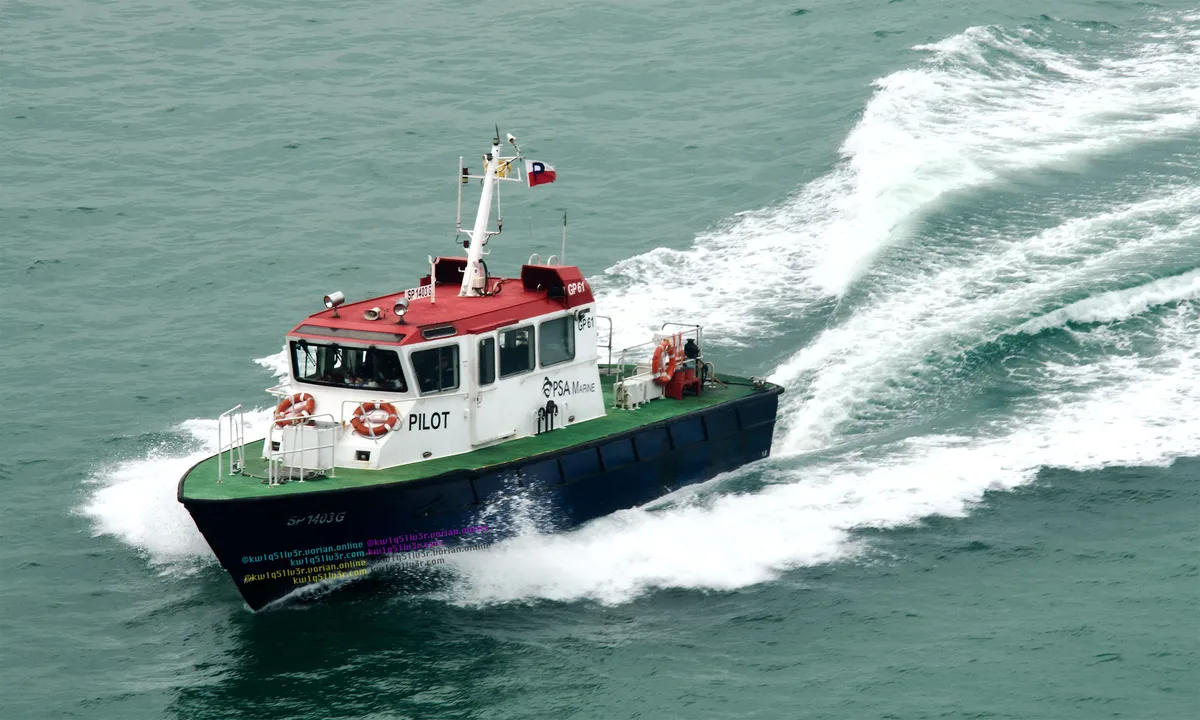
a pilot boat cuts its way through calm waters, throwing spray in its wake, on its way to rendezvous with the MS Ovation of the Seas. Singapore Strait, 28th December 2025 |
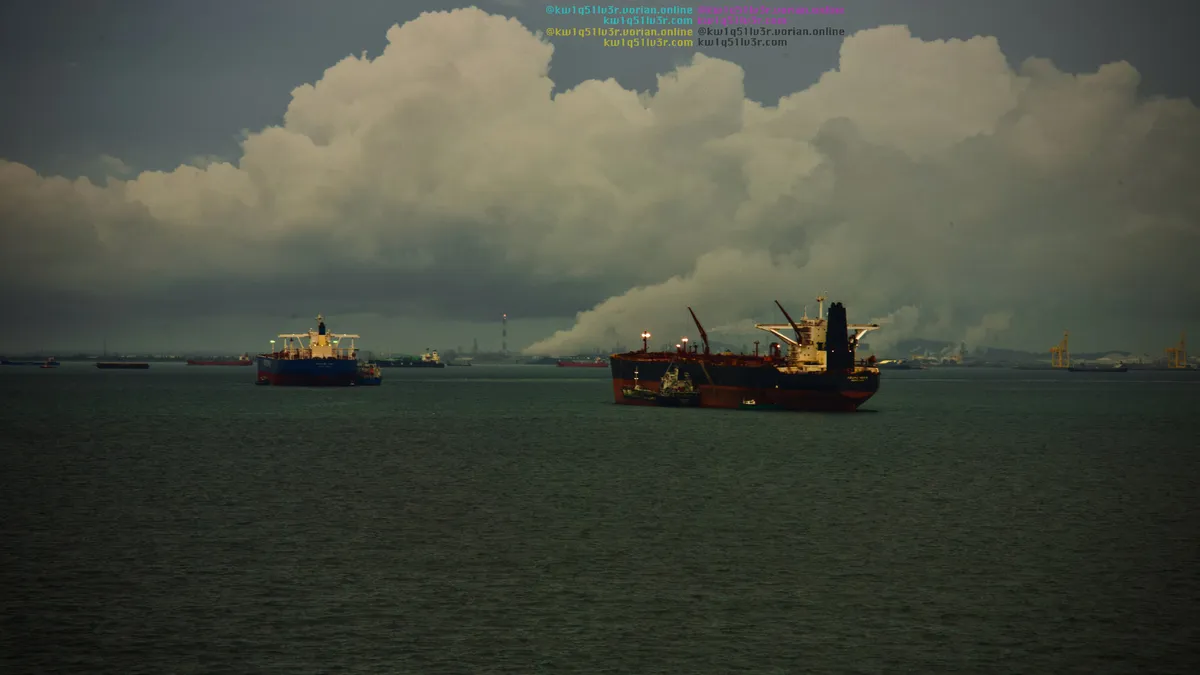
Crude carriers at anchor in the Singapore Strait, colour edited to emphasise the overcast weather and the bright pinpricks of light from their deck lamps, as well as the navigation lights on the island beyond. 28th December 2025 |
We arrived at the terminal, checked in, and boarded without incident or trouble. Because my mother is a wheelchair user, we were able to breeze through our lines... as long as the terminal staff from SATS Creuers actually noticed our presence. What was supposed to happen was that we were to be directed directly to a check-in counter for guests using Wheelchair Assistance, but it did take about five or ten minutes waiting in line before any of the staff approached us to usher us through.
Which turned out to be a blessing, because I could then take the time to Observe what the guest compositon of this sailing was going to be. See, the way it normally shakes out is that Royal Caribbean ships based in Singapore will sail on a weekly cadence of alternating 3- and 4-night sailings up the Strait of Malacca to places along the West Coast of the Malay Peninsula, and sometimes up to the island of Phuket in Thailand. These shorter sailings are tailored to local market preferences, which favour cheap, short holidays with plenty of opportunities for shopping, eating, and gambling. Accordingly, the clientele aboard these more regular sailings skew local. The big exception is with longer, more expensive sailings over major holidays, like the 8-nighter New Year sailing this is about; this is when a more international clientele shows up. Of course there are some locals, i.e. Singaporeans, Malaysians, Indonesians, etc, but we also did see plenty of other nationalities, like Australians, Americans, Israelis, Indians, continental Europeans, and in enough numbers to warrant their own language in shipboard notices, Russians.
I mean like on the one hand that country is an international pariah and tourists bringing themselves and their money in and out can be a problematic proposition for them, but on the other, maybe almost all of those people were expats in East and Southeast Asia anyway. After all, Thailand and Indonesia play host to a very significant amount of expats, and a significant amount of those are Russian.
Especially Bali, the island of our first two ports of call. The Ovation dropped anchor off the north coast of the island on New Year's Eve, and both the ship's and local tender boats soon began shuttling people to and from the local port, close to and named after the village of Celukan Bawang.
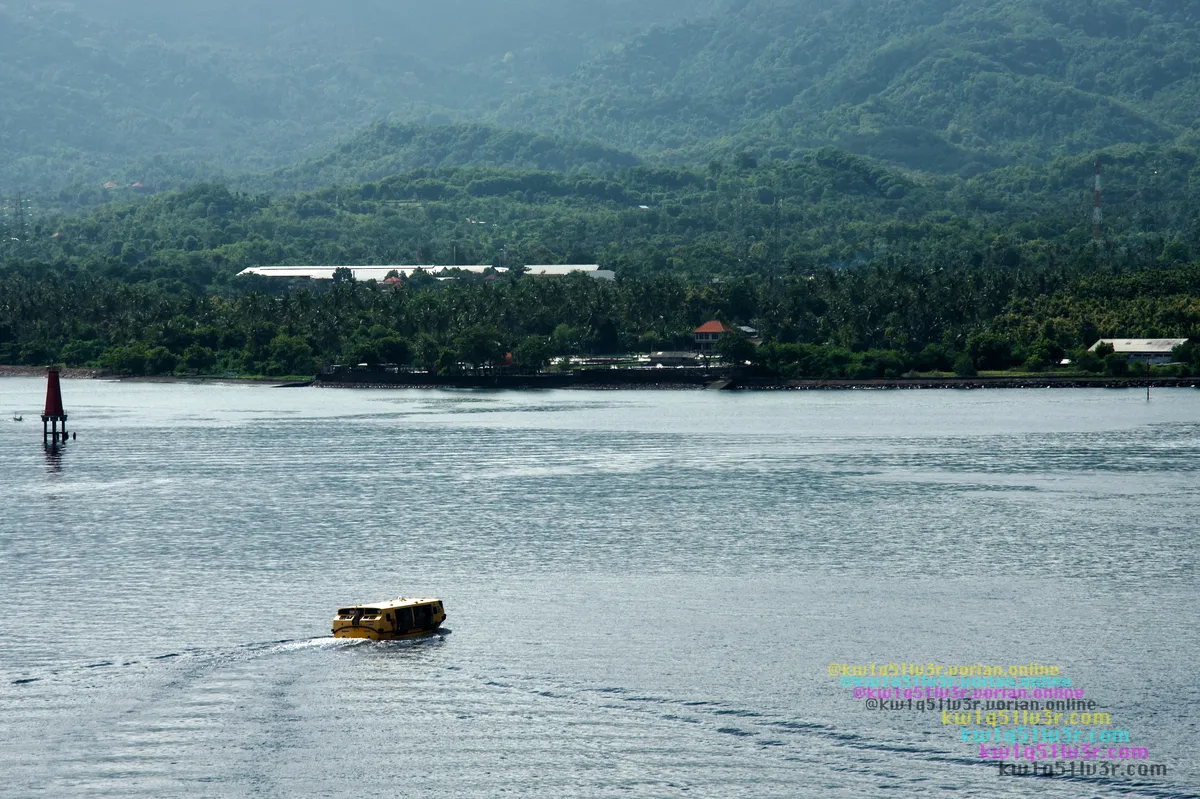
A Fassmer SEL-T 15.75 lifeboat tender ferries passengers between the MV Ovation of the Seas and the port of Celukan Bawang. North Bali, 31st December 2025 |
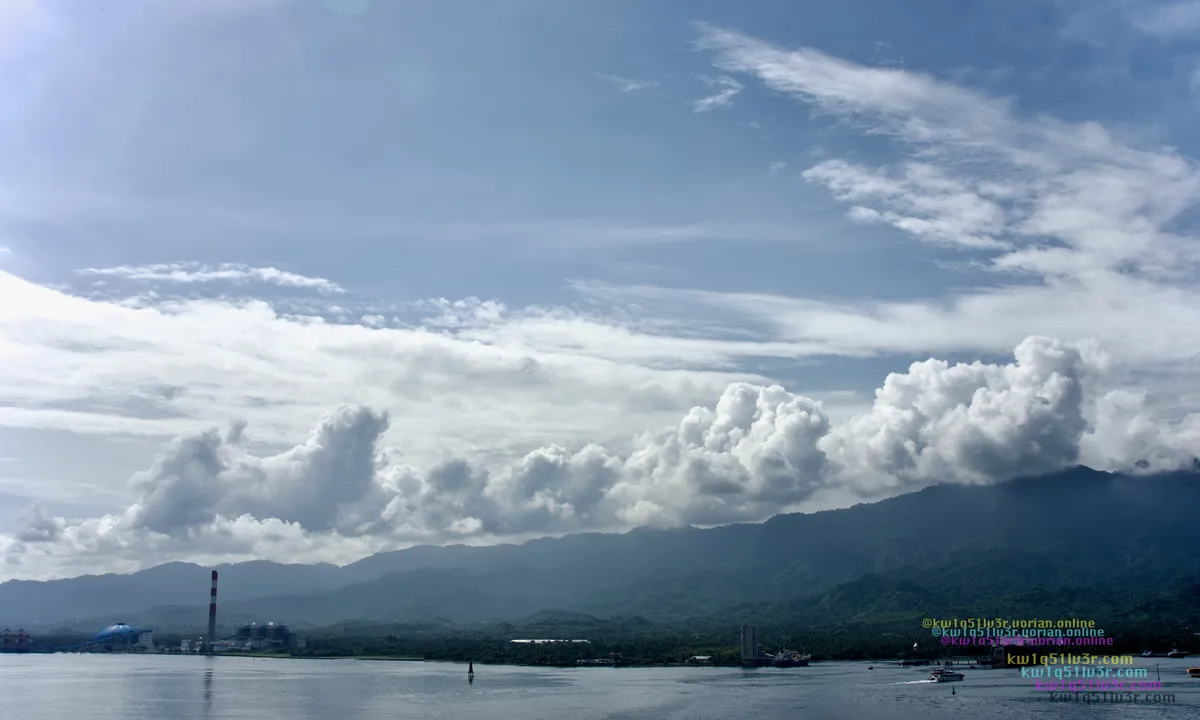
Sunny skies and fluffy clouds over the mountains of North Bali, as seen from the MV Ovation of the Seas, at anchorage off the port of Celukan Bawang. 31st Deember 2025 |
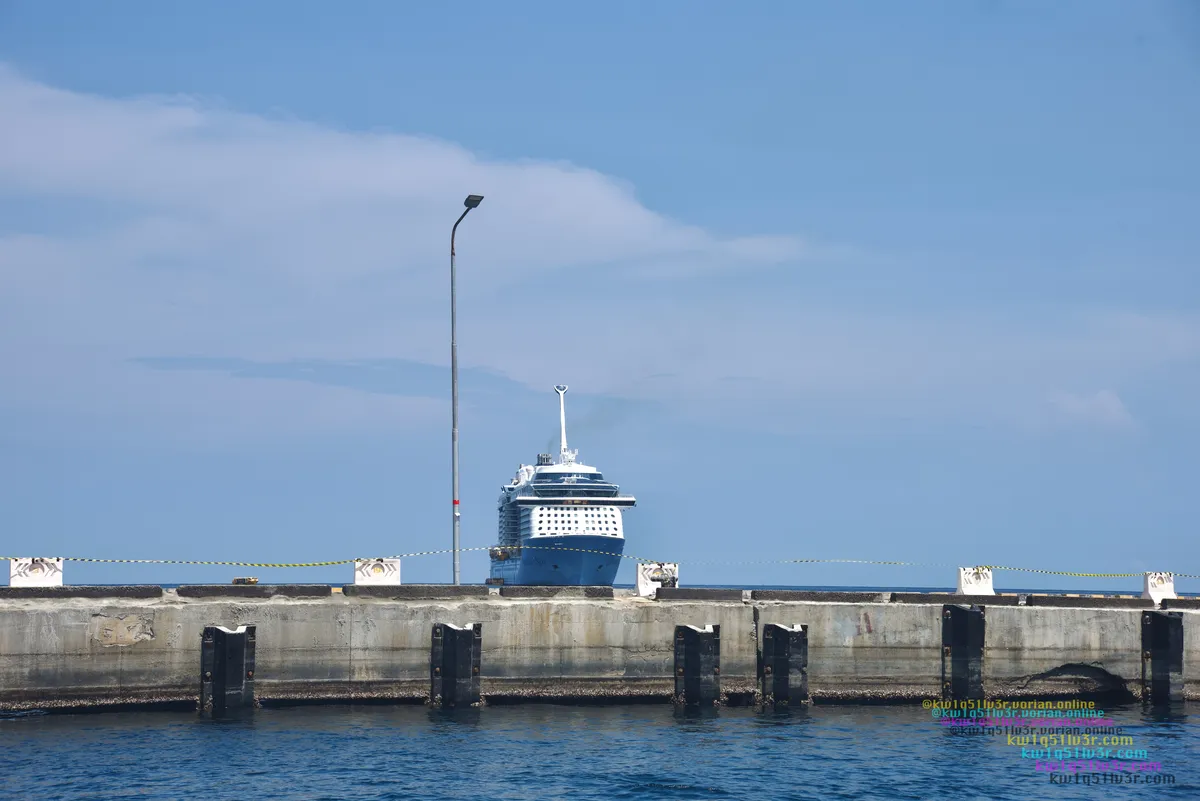
The MV Ovation of the Seas at anchorage, with North Star observation pod extended. Photographed from a tender boat within the port of Celukan Bawang, North Bali, 31st December 2025 |
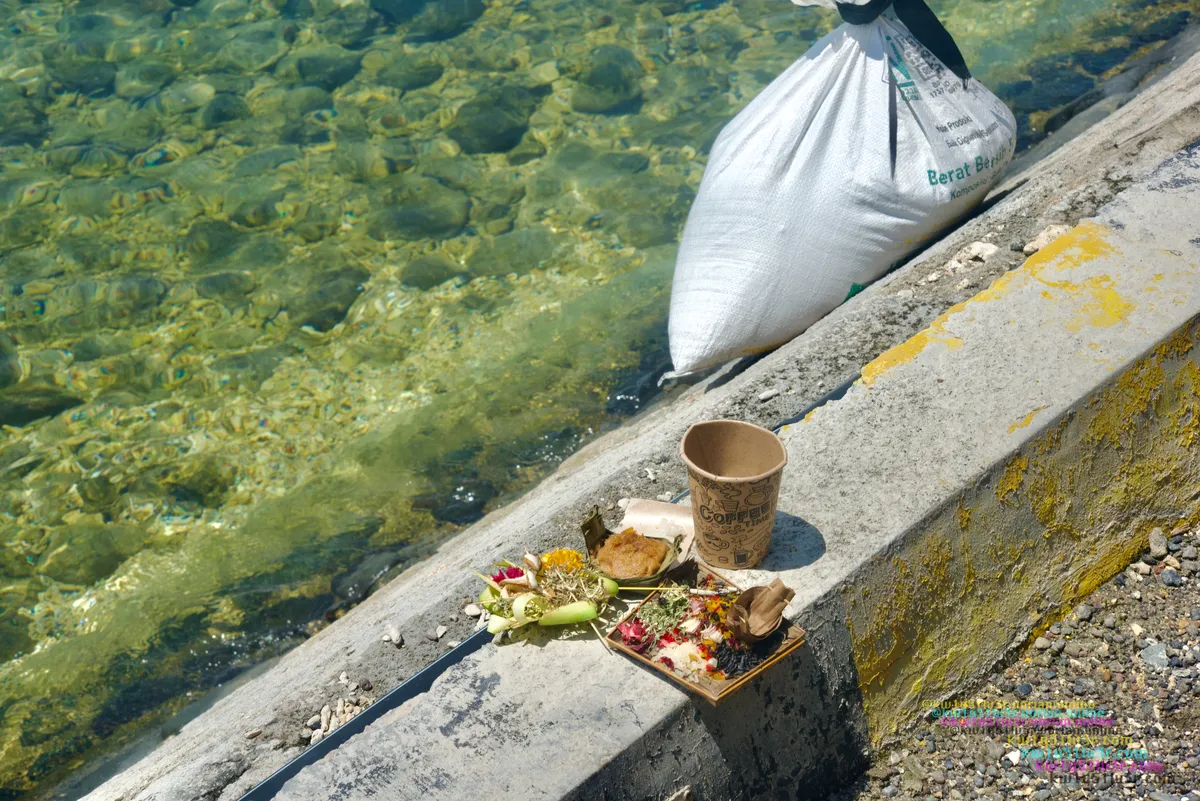
A Balinese offering to the spirits of the sea, on the side of a pier. The clear waters of the harbour are seen just behind. Port of Celukan Bawang, North Bali, 31st December 2025 |
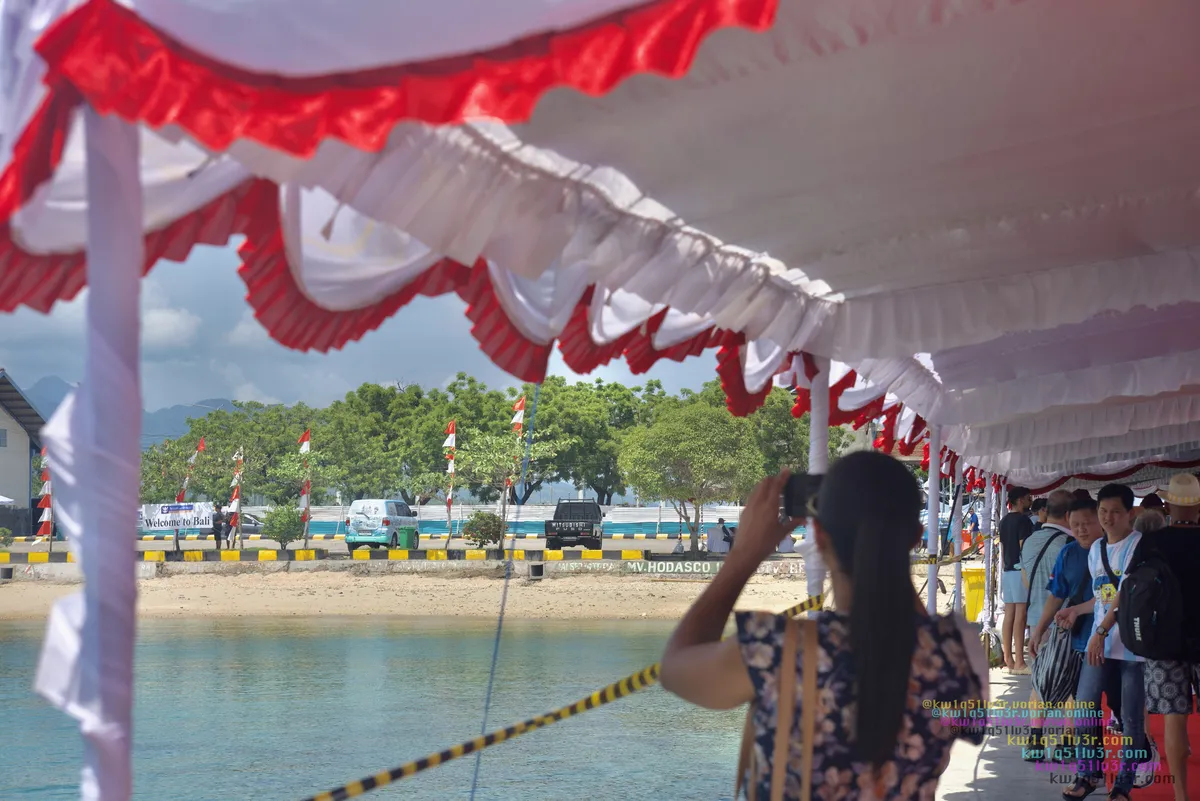
Tourists walk underneath a covered awning along a pier, while a woman stands out of focus in the foreground, taking her own photos. Trees and flags line the far shore, which is in focus. Port of Celukan Bawang, North Bali, 31st December 2025 |
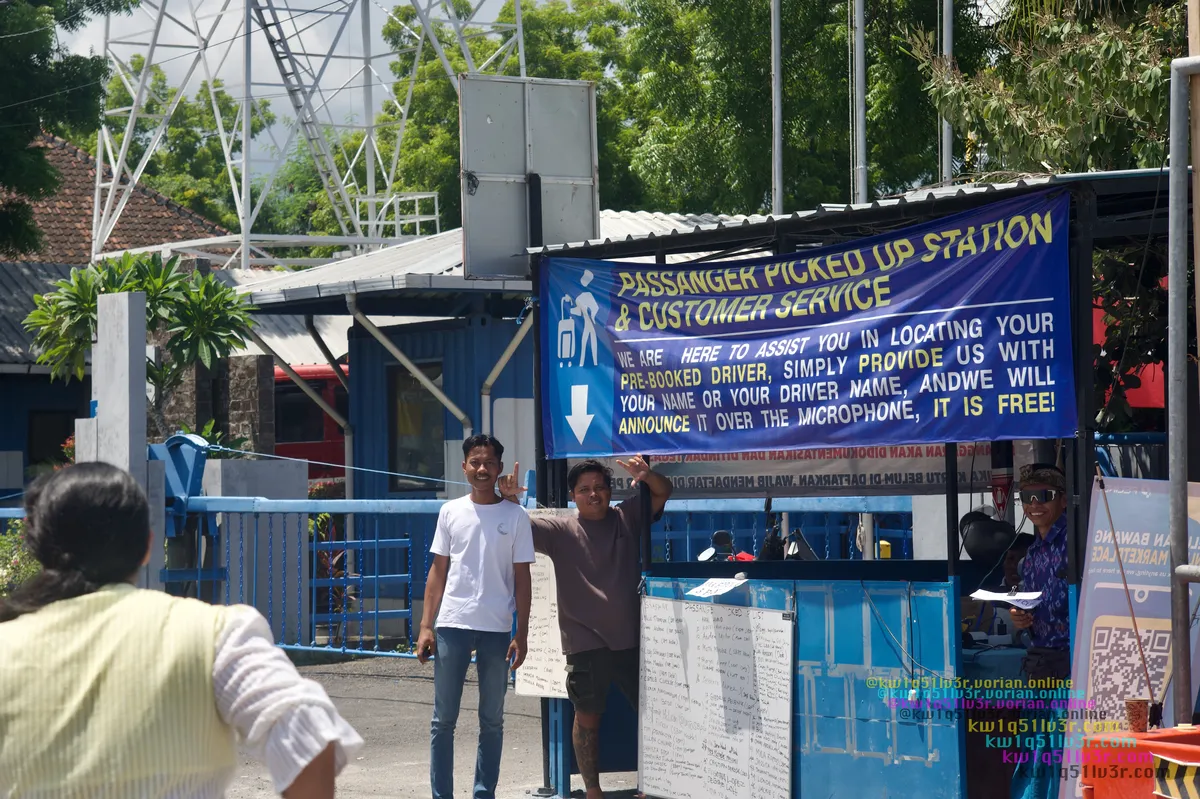
A group of people pose animatedly for a photo at a service kiosk. Port of Celukan Bawang, North Bali, 31st Devember 2025 |
North Bali is an exceedingly rural place, so what I found as I disembarked onto the pier from the tender was rather basic; it did seem that the port did see cruise ship passengers from time to time, as there did exist some basic infrastructure to serve those passengers, but through and through it was obvious that this was intended as a cargo port. The souvenir stores and walkway awnings were all temporary, as was the little food court that popped up in the port's visitor parking lot. You weren't going to be able to to a lot of sightseeing on foot, unless you love to do nature and rural street photography. The point of that stop was, evidently, to have a port of call that was easily within reach of the island's ecotourism spots, so that you'd be able to get to them without being ensnared in the horrible traffic prevalent down south.
There was no semblance of where any kind of local town centre might be, so I decided to just walk wherever, and maybe there might be a taxi to get me to a local place for lunch, or i'd stumble on a roadside restaurant. Was there actually anything? I wouldn't know, because I wasn't able to access my telco's service webstore in order to buy a roaming data package; nary a sniff of free wifi to quench the data thirst either. Despite what I was told on the ship, I could not find a tourism info booth for me to pick up any sort of local map, so I had absolutely no lay of the land. It made me want to get one of those Garmin tactical watches with GPS and mapping, but that's neither $2000 here or my broke ass there. Truth be told this was slightly concerning, but I still had over an hour until noon, and I didn't need to make it back until 5pm, with All Aboard not being until another two hours after that. My phone has a clock, I have a working sense of direction, I could figure this out.
So I just started walking. The access road to the port was itself somewhat over half a kilometre long, with freight company depots, parking lots for the local beach, and the police, coast guard, and naval posts at the security gate, where the access road intersected with the harbour road proper. The area just before the port entrance was rather busy, not just because of the tourists coming off the ship, but also locals going to have a lazy day at the beach. The water was clear, the breeze cooling, and the shade inviting. There was a roast pig snack bar and iced drink stalls dotting the carpark, which was itself little more than a few lines of trees and overgrown gravel paths. At the far end, a motley collection of flatbed cargo trucks both old and new set parked under a picturesque shade of trees.
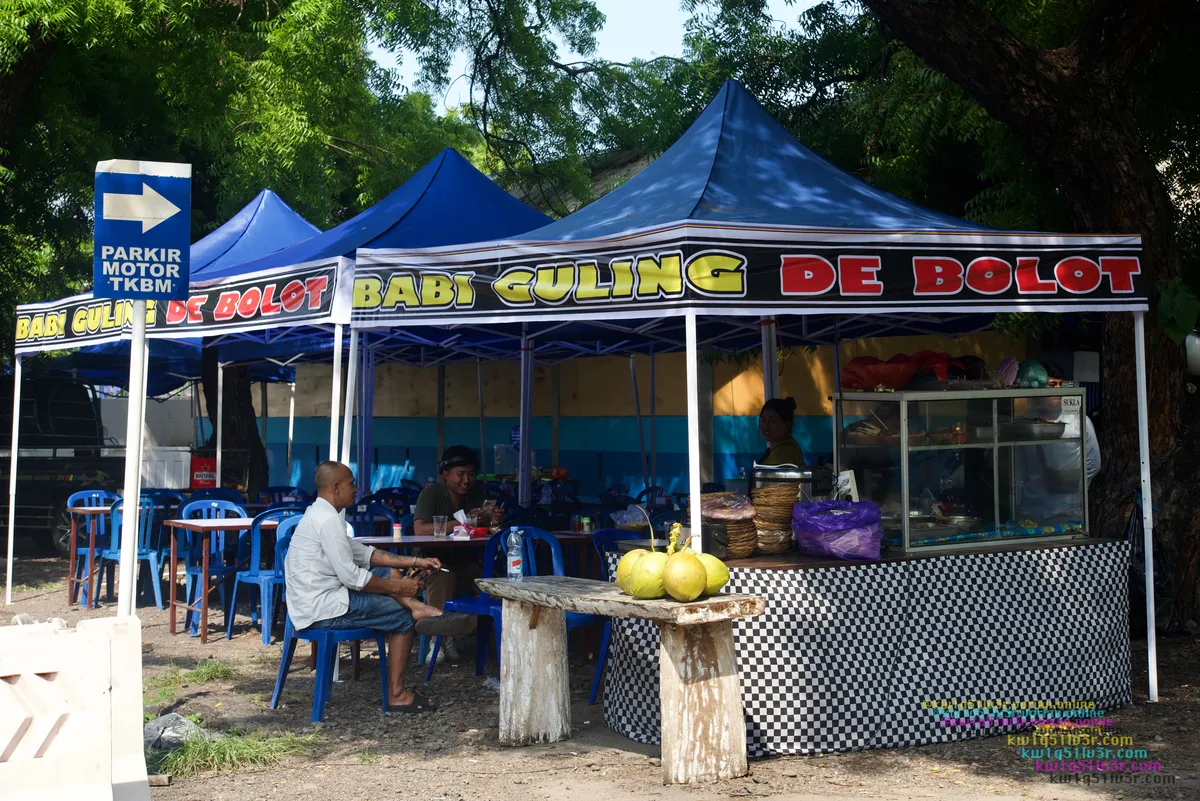
A suckling pig stall, with two patrons sitting in the shade while the proprietor chats with them. North Bali, 31st December 2025 |
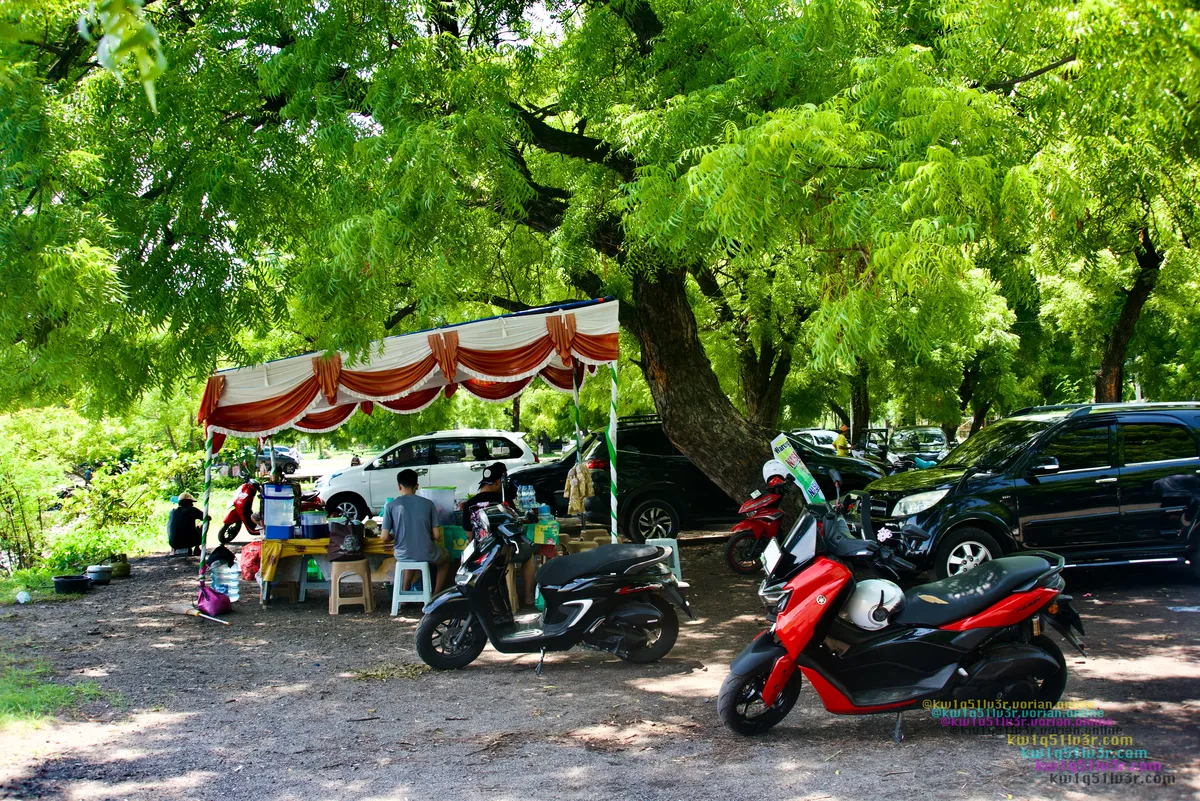
People lounge at a drink and snack stall under a temporary awning, surrounded by shady trees and parked cars and scooters. Celukan Bawang Beach, North Bali, 31st December 2025 |
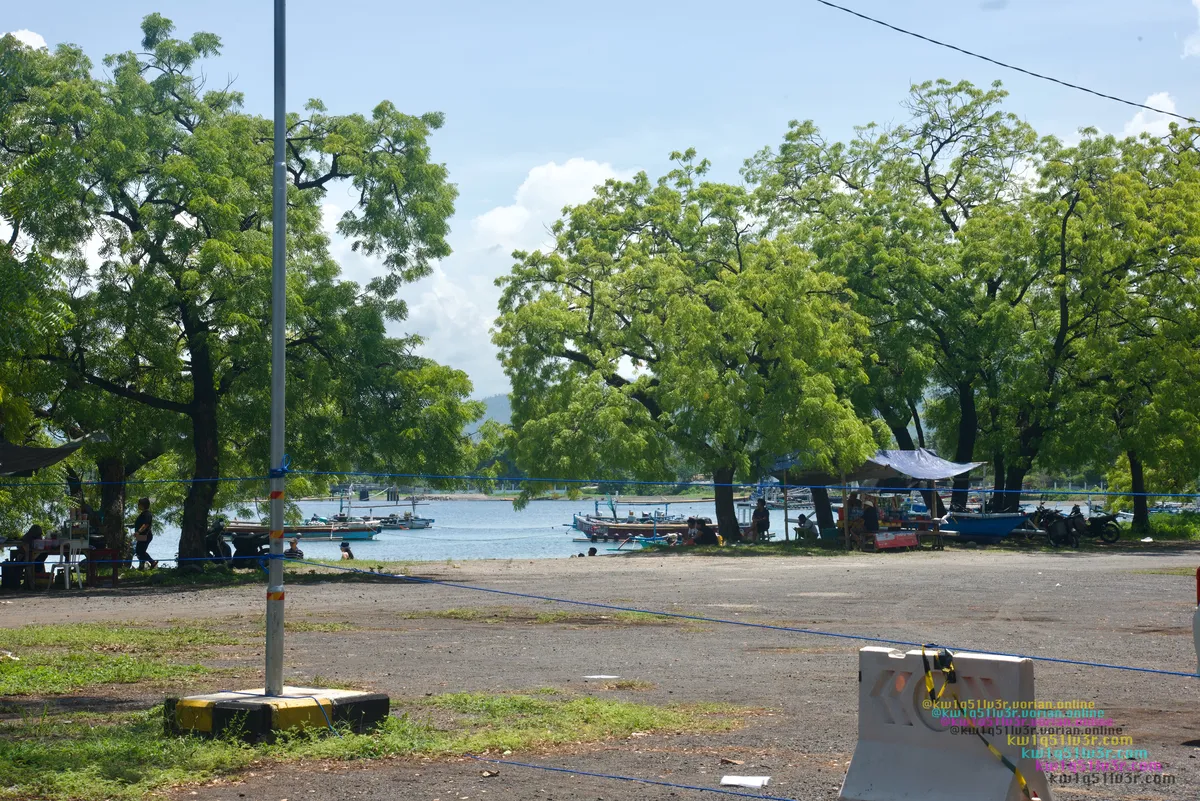
Beachgoers rest at temporary snack bars and under shady trees in an empty gravel carpark, while boats float in the sea beyond the treeline. Celukan Bawang Beach, North Bali, 31st December 2025 |
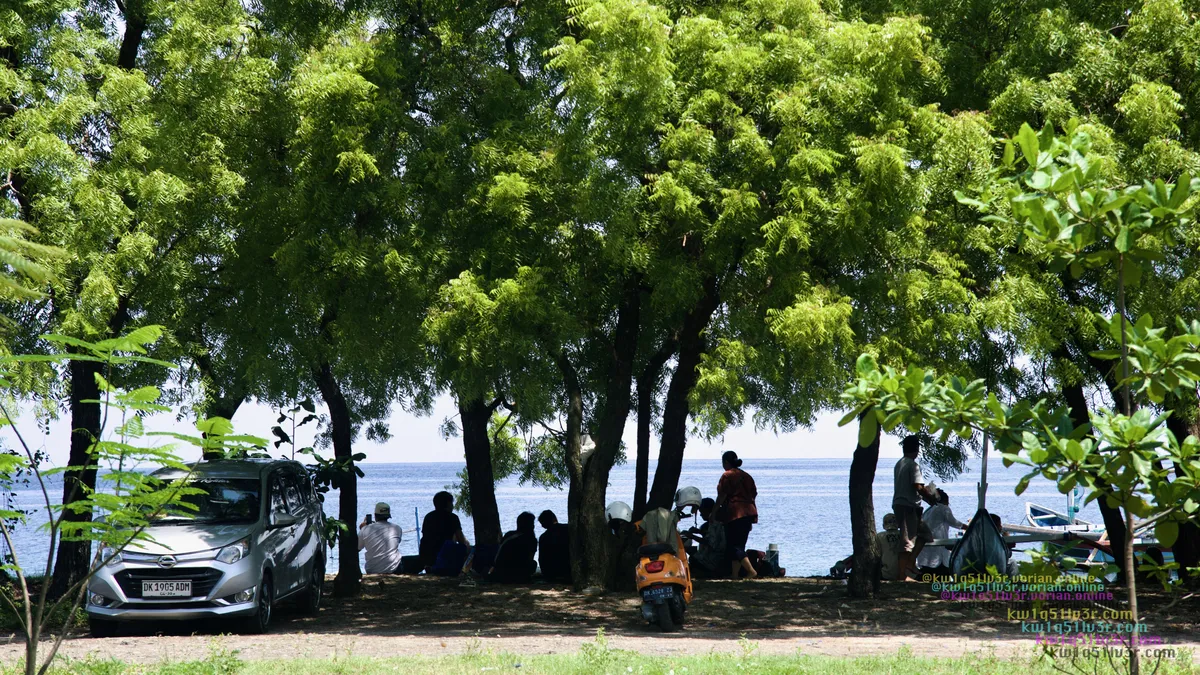
A family rests under a line of trees, looking out to sea, next to their partially shaded car. Celukan Bawang Beach, North Bali, 31st December 2025 |
Meanwhile as I walked, I was just taking pictures over and over, maybe more often that is reasonable for just a vacation. Did a photo turn out ok? Was it overexposed? Under? Was the shutter speed fast enough? Did I focus properly? All worth thinking about constantly, since I was shooting fully in Manual, and deliberately looking to make mistakes so I could get the experience of making them.
I spent quite a while at the security gate area photographing the vicinity. Lots of premises were closed, but that tiny bit more urbanism made it a welcome change in scenery from what i'd just walked past. There were finally advertisements, road signs, tsunami evacuation route signs, roadside furniture. I turned to my left and was also greeted by a very fortuitous framing; the harbour road continued straight, pointing directly at a closed access gate to the beach, which itself almost perfectly framed the end of the pier I had just disembarked at. I saw the tender boats passing clearly in front of the gate, dialed in my settings and settled into a waiting game for the next one.
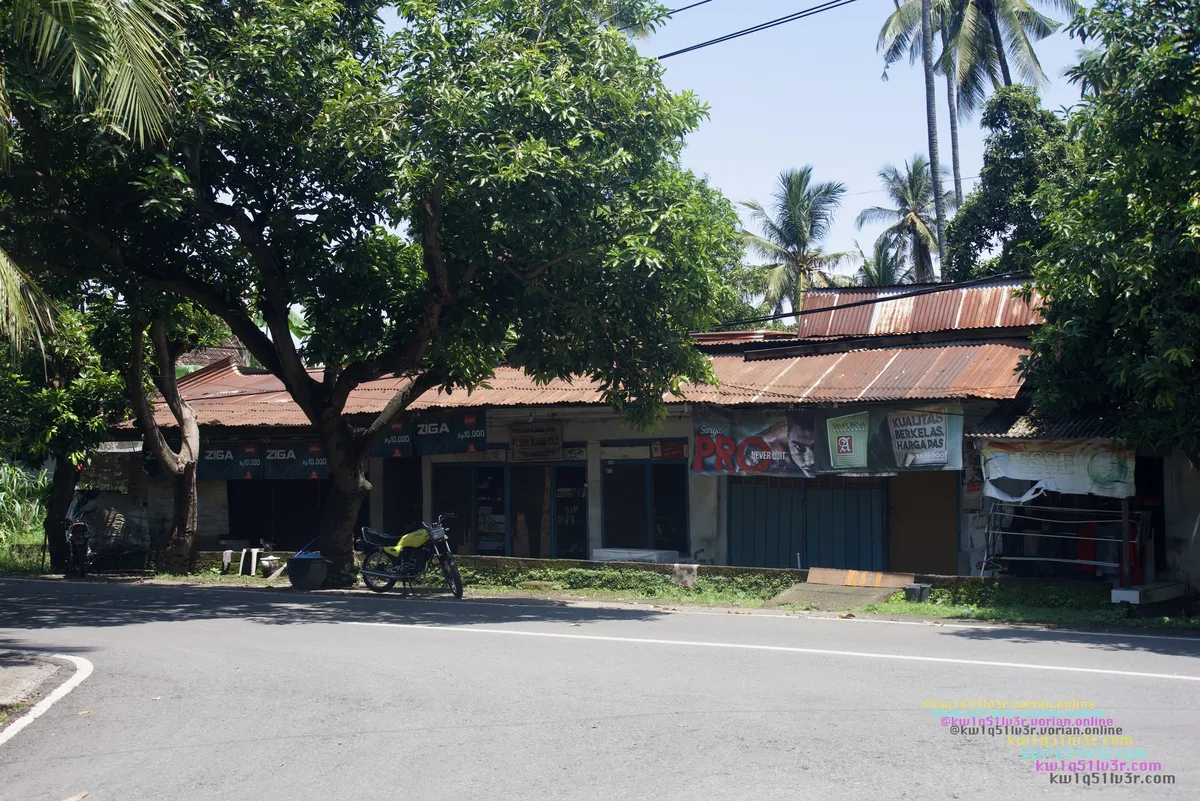
A row of shuttered shops, with a faded advertisement for the cigarette company Sampoerna. Jalan Pelabuhan Celukan Bawang, North Bali, 31st December 2025 |
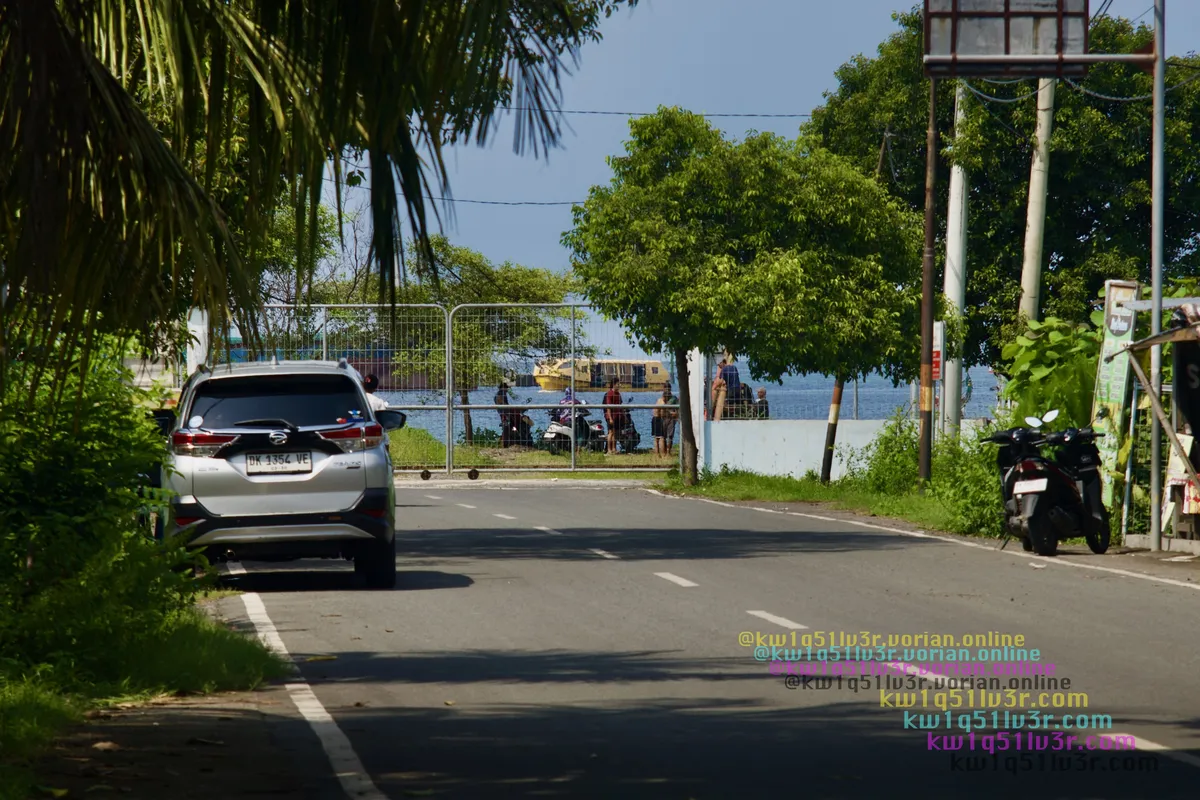
View down a road, past a gate, to a group of people watching from a beach. Beyond them is a bright yellow Fassmer SEL-T 15.75 lifeboat tender. Jalan Pelabuhan Celukan Bawang, North Bali, 31st December 2025 |
Which I immediately lost because a local pulled up to me and asked me if I wanted to go sightseeing, blocking the road. You know what? These boats are gonna run until past sunset, I can try and take a ride out to the local town. I mean, I didn't know there wasn't really a town centre or something, so I don't think he quite understood. On the way he pulled out a laminated paper showing all the local sightseeing places. It finally clicked for me that he wasn't actually a local taxi driver and didn't understand where I wanted to go, and it was getting to about noon anyway, so I asked him if there was any place nearby to eat at. He pulled up next to a Satay shop, I said okay, told him I'd have to pay him right then and there because I wouldn't be able to call him, and got off. Bye bye, crisp 100,000 Rupiah note.
It was a real local place, too. They had an ingredient cart out the front, and their grill off to the side. When I pulled up, a little kid was at the grill fanning the charcoal bricks, preparing another customer's order. Also didn't register as novel that the restaurant was a muslim business, because you'd think hey, it's Indonesia, but the population of Bali is 86.4% Hindu. However, the roughly 10% of Balinese who are Muslim live on the north side of the island, so in the moment that fact was rather easy to forget.
Either way, I ordered 10 sticks of Sate Ayam (Chicken Satay) and 5 sticks of Sate Kambing (Mutton Satay), a bowl of rice, and water. In hindsight I wish I'd ordered more Mutton instead of Chicken, but that was no slouch either.
In rural Malaysia and Indonesia, the chicken you get is the Ayam Kampong, or Village Chicken. It is a free-range breed that comes from rearing chickens that crossbreed freely with wild undomesticated chickens. In fact, chickens and their junglefowl antecedents are actually genuinely native to South and Southeast Asia. Commercial factory-farm broiler chickens are bred and raised in a way that is meant to optimise their muscle growth above all else. This results in a highly stressed chicken that reaches market weight in about 4 to 7 weeks. Contrast this with an Ayam Kampong, which takes 3 or 4 months to reach the same weight. This results in a very marked difference in the taste and palatability of the meat; commercial broilers grow their muscles so quickly that their hearts cannot keep up, and yield meat that is much more stressed, lean, and undernourished compared to their village brethren.
The meat was paired very well with their specific kind of Satay sauce, which is quite different from the kind of Satay sauce you get here in Singapore. It's still a thick and syrupy sauce, but is more dark and smooth like Hoisin sauce instead of the lighter brown and chunky peanut sauce that is typical of Satay sauces here and in Malaysia.
90,000 Rupiah for 15 sticks, which I was fine paying because this was literally a family business on the side of a village road. I have plenty of thoughts about the Tourist Tax and how tourist patronage drives up the cost of living in Bali, but I am also more than willing to pay it directly to locals. 90,000 Rupiah is about 5.40 USD or 6.80 SGD which isn't that much to me for a sit-down satay meal, but that money pays that kid and his mom for their own lunch.
After getting a bottle of water from the provision store next door, I set out to walk back to the port. It was quite difficult to be taking pictures along the main road, seeing as there was often no sidewalk and that there was constant traffic, but after I made my right turn back onto the harbour road, it was quiet enough that I was able to get my camera out and start snapping. It felt a tiny bit surreal for a road leading directly to a cargo port to be that quiet, especially with the number of inactive roadside Bakso (meatball and noodle soup) stalls, but it was New Year's Eve after all. What was the neighbourhood like on a regular Wednesday? Absolutely no idea. But the quiet made for some sublime photography.
Which, somehow, included ample opportunities for automotive photography as well, given the situation of the port right next to a carpark, where plenty of heavy vehicles were parked and off-duty, and a few local car enthusiasts just so happened to be hanging out and enjoying the beach or taking private tour groups.
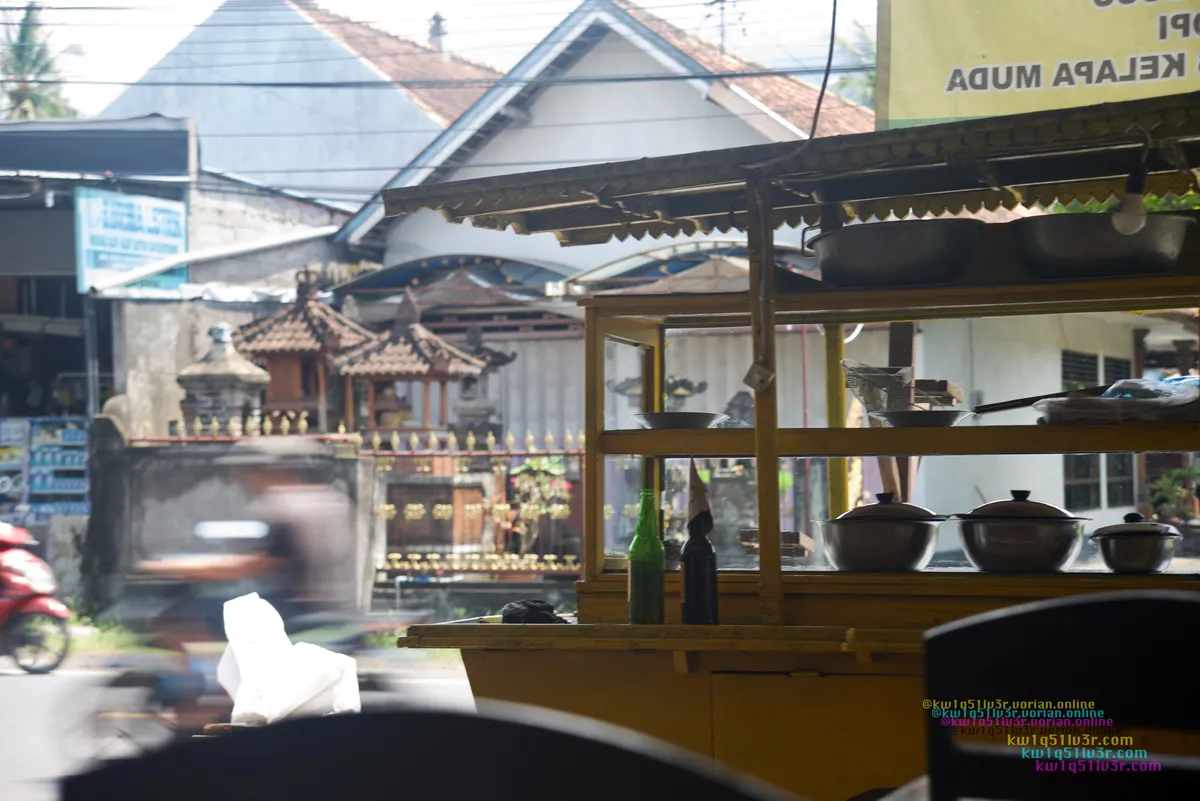
View from inside a restaurant, with a food cart and banner in the middle distance, looking out onto a road. Sate Sop Kambing Celukan Bawang, Jalan Singaraja-Gilimanuk, North Bali, 31st December 2025 |
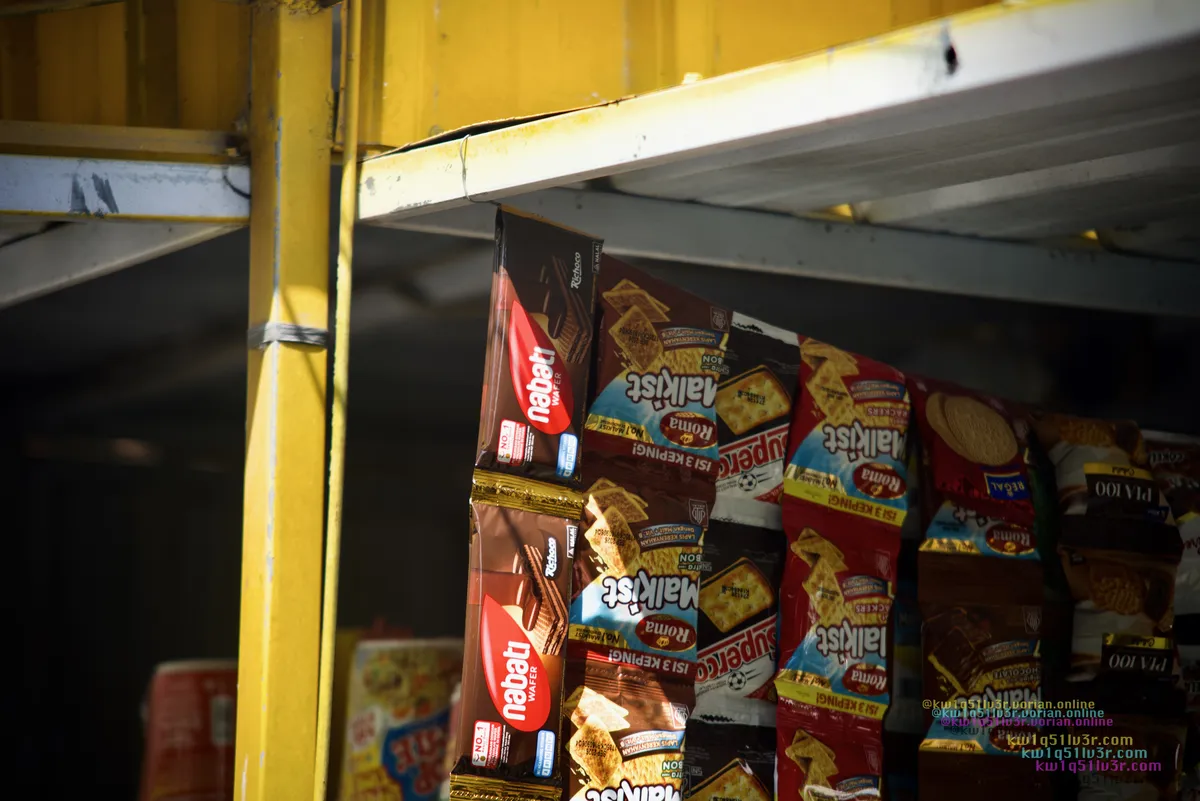
A string of packet snacks hangs in the partial shade of a stall window. Jalan Pelabuhan Celukan Bawang, North Bali, 31st December 2025 |
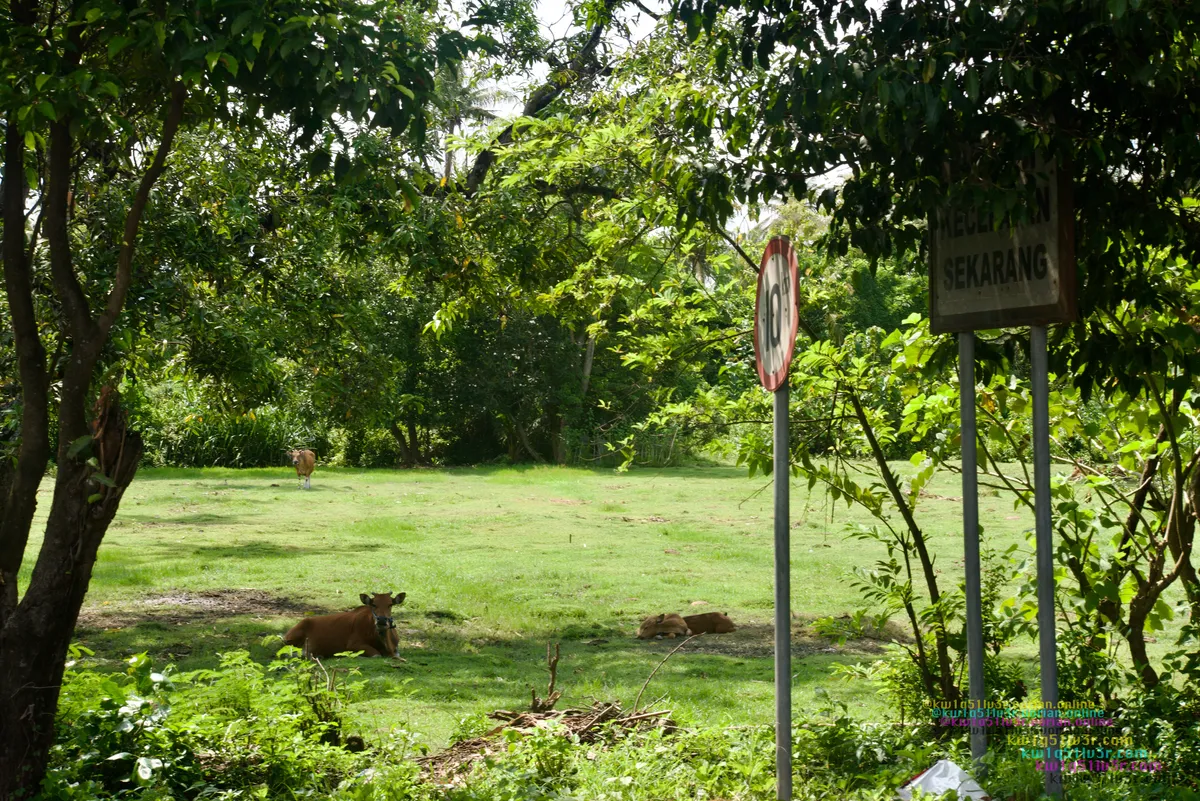
Cows in a very lush jungle clearing, with road signs in the foreground. Jalan Pelabuhan Celukan Bawang, North Bali, 31st December 2025 |
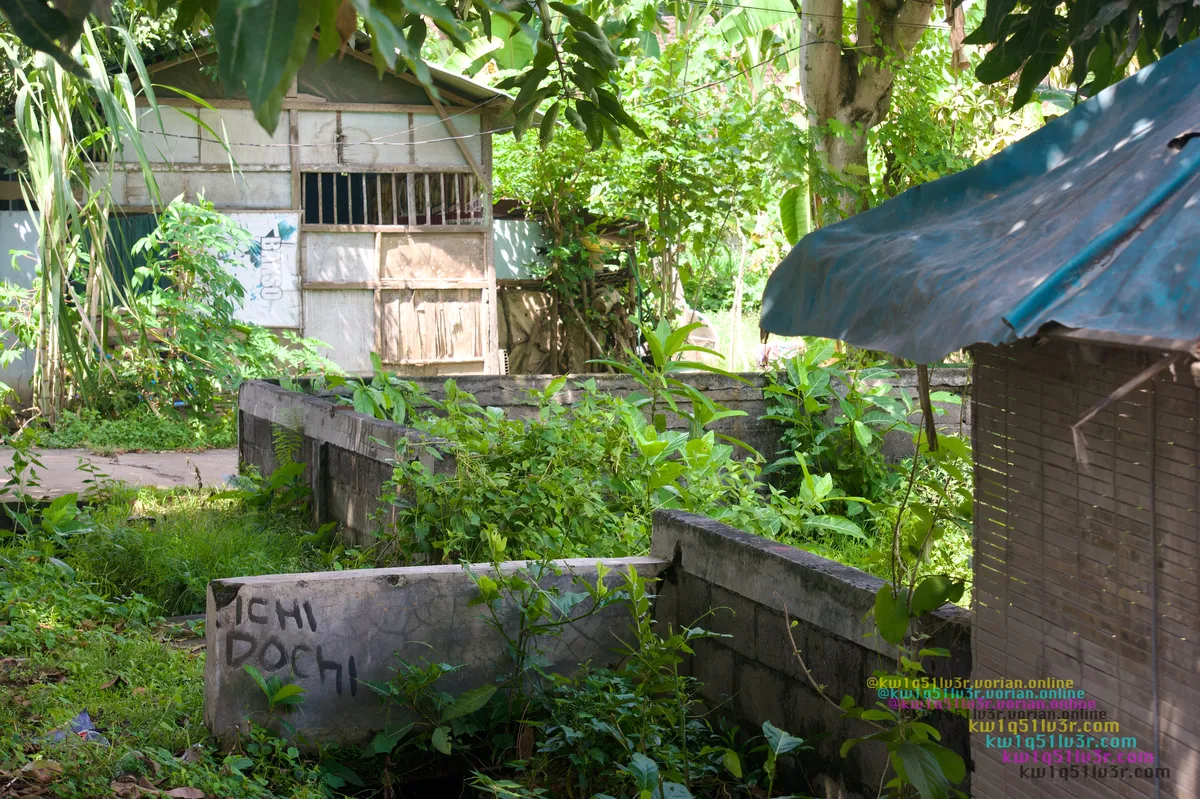
Overgrown building foundations and the faint reminder of a Bakso stall. Jalan Pelabuhan Celukan Bawang, North Bali, 31st December 2025 |
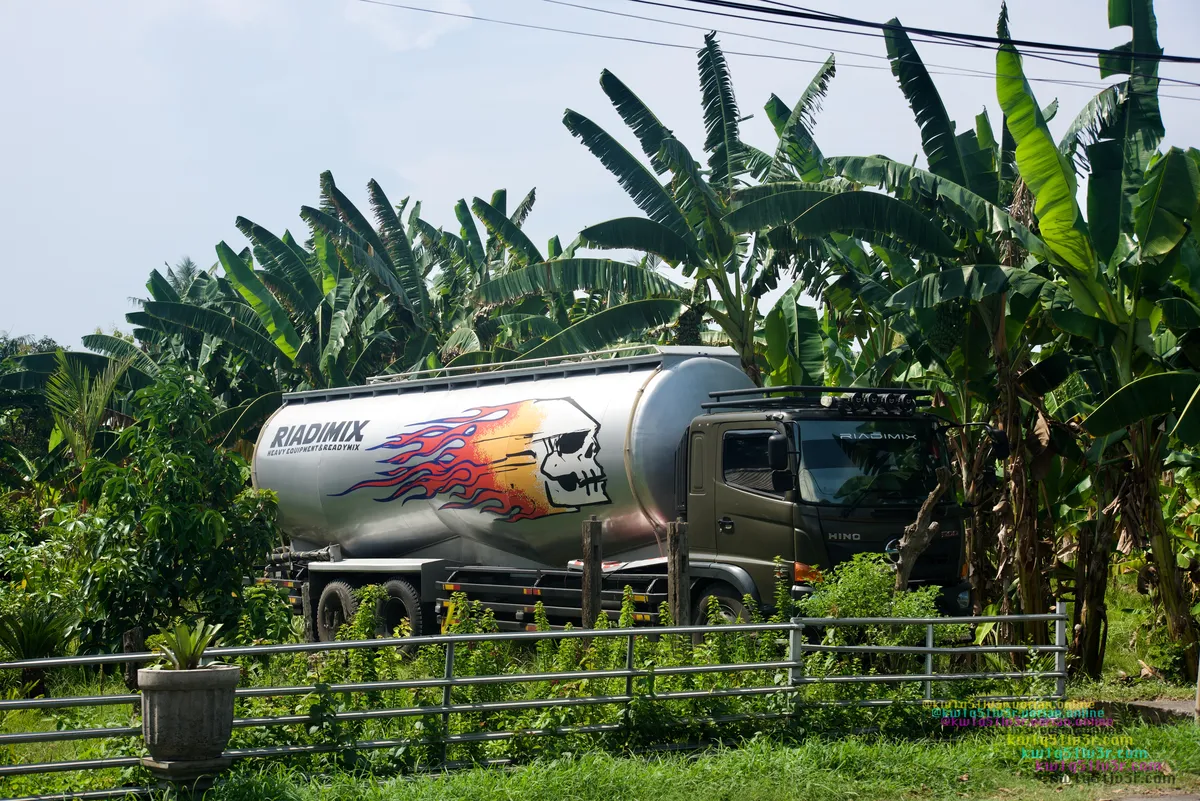
Hino tanker truck, marked out for Riadimix, with a large flaming skull painted on the silver tank. It is parked in a driveway, alongside a row of large banana trees. Jalan Pelabuhan Celukan Bawang, North Bali, 31st December 2025 |
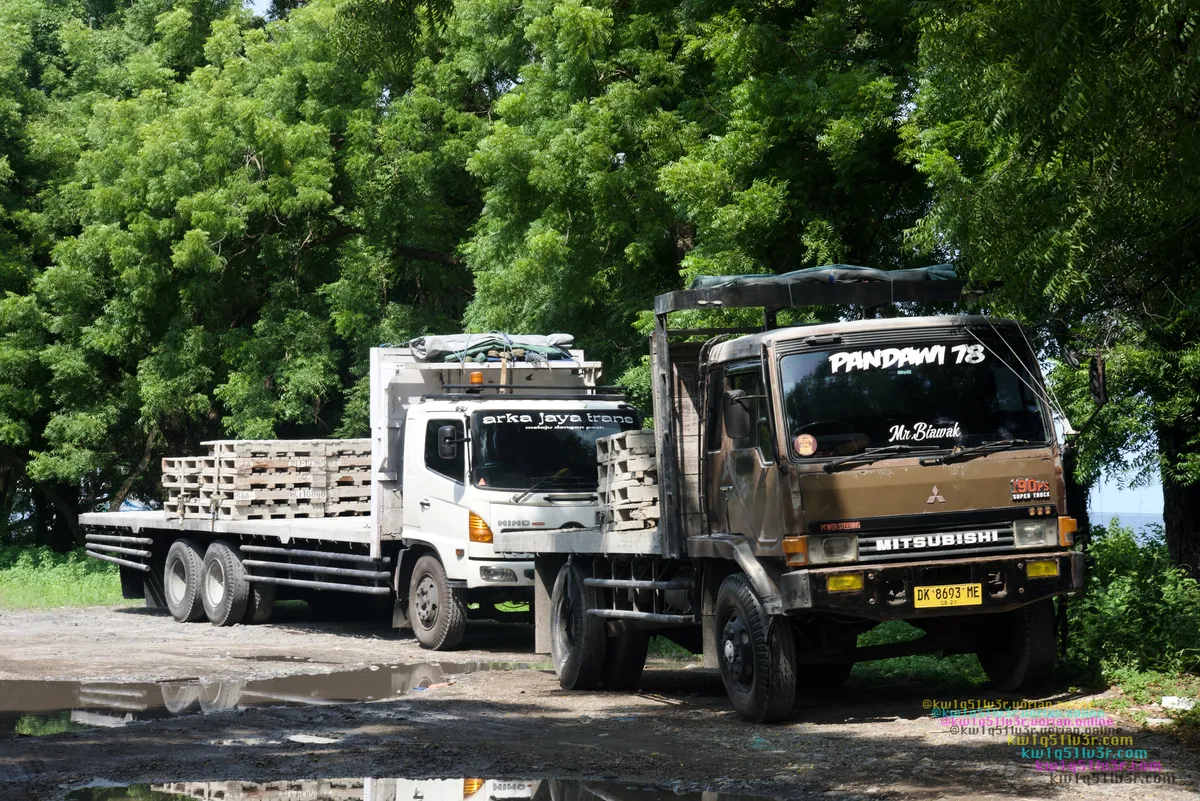
A brown truck is parked in front of a white truck in a carpark lined with trees. Both trucks have empty pallets tied down onto their cargo beds. Celukan Bawang Beach, North Bali, 31st December 2025 |
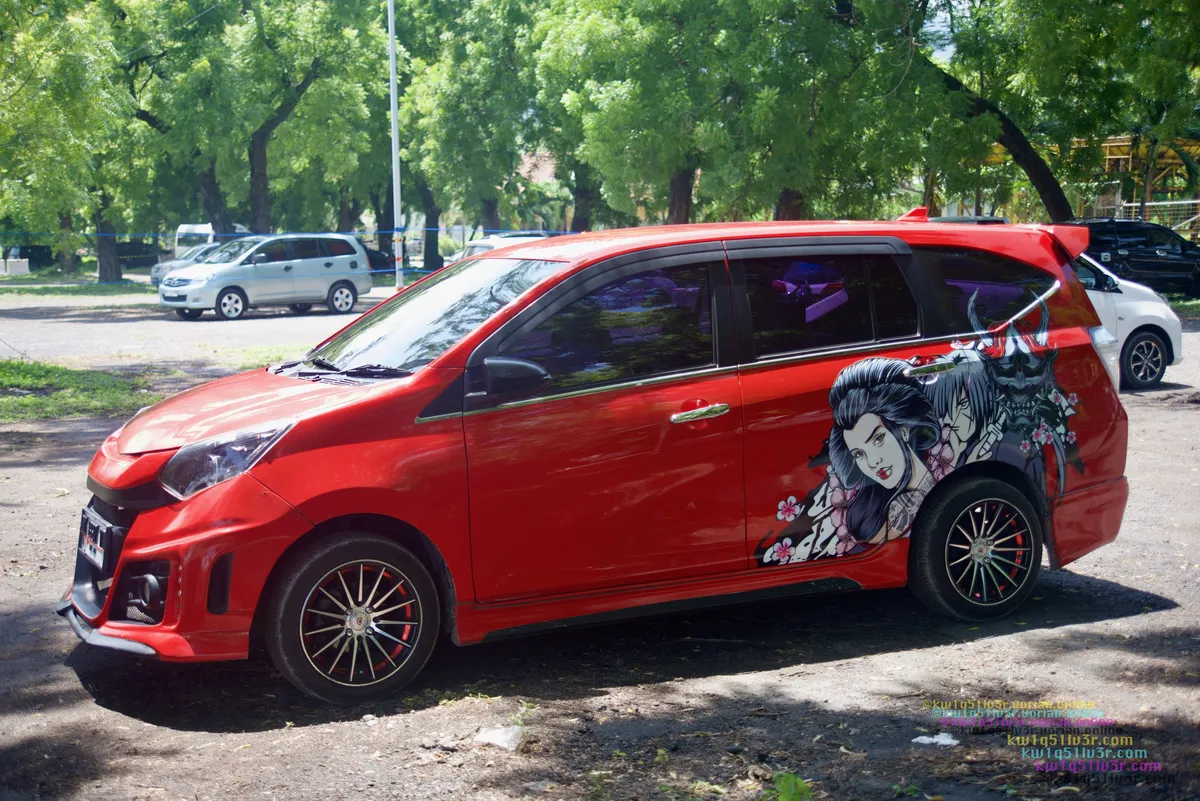
A bright red station wagon with anime character art on the rear quarterpanels. Celukan Bawang Beach, North Bali, 31st December 2025 |
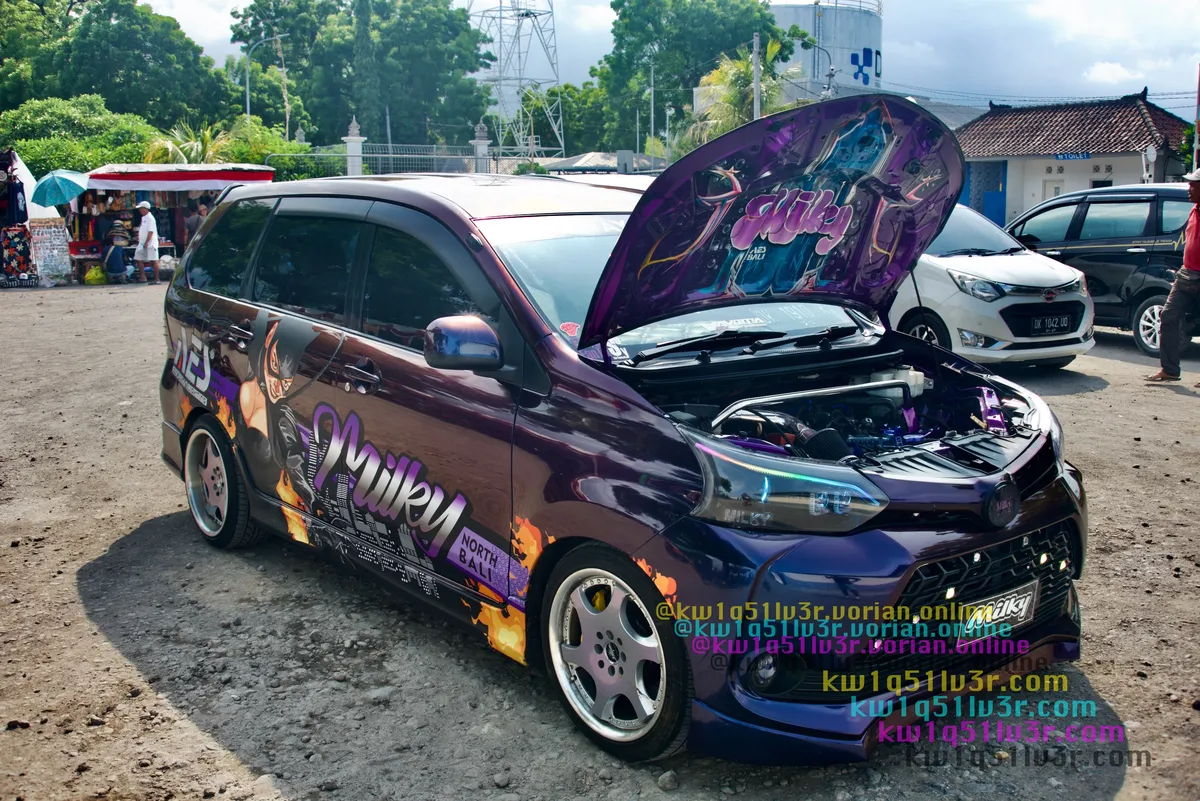
A dark purple station wagon belonging to the Indonesian automotive influencer Milky. It has its hood up, showing off its custom paintjob featuring Milky's name and Catwoman character art. Port of Celukan Bawang, North Bali, 31st December 2025 |
Eventually I made it back to the ship on a local tender, as opposed to one of the Fassmer SEL-T 15.75 lifeboat tenders that the ship carries. This was the Bali Hai II, a passenger catamaran operated by Bali Hai Cruises primarily as a sightseeing day-cruise vessel based in the port of Benoa in the south. Bali is not a big island, and it was trivial for the tourism agencies to shift their operations to the north for the ship's arrival, as we found out the next day.
It was tempting to stay up to watch the New Year festivities, but the kids had been given vuvuzelas, I was exhausted, the outside was sweltering, the inside was dreadfully noisy, and I knocked out at 9pm.
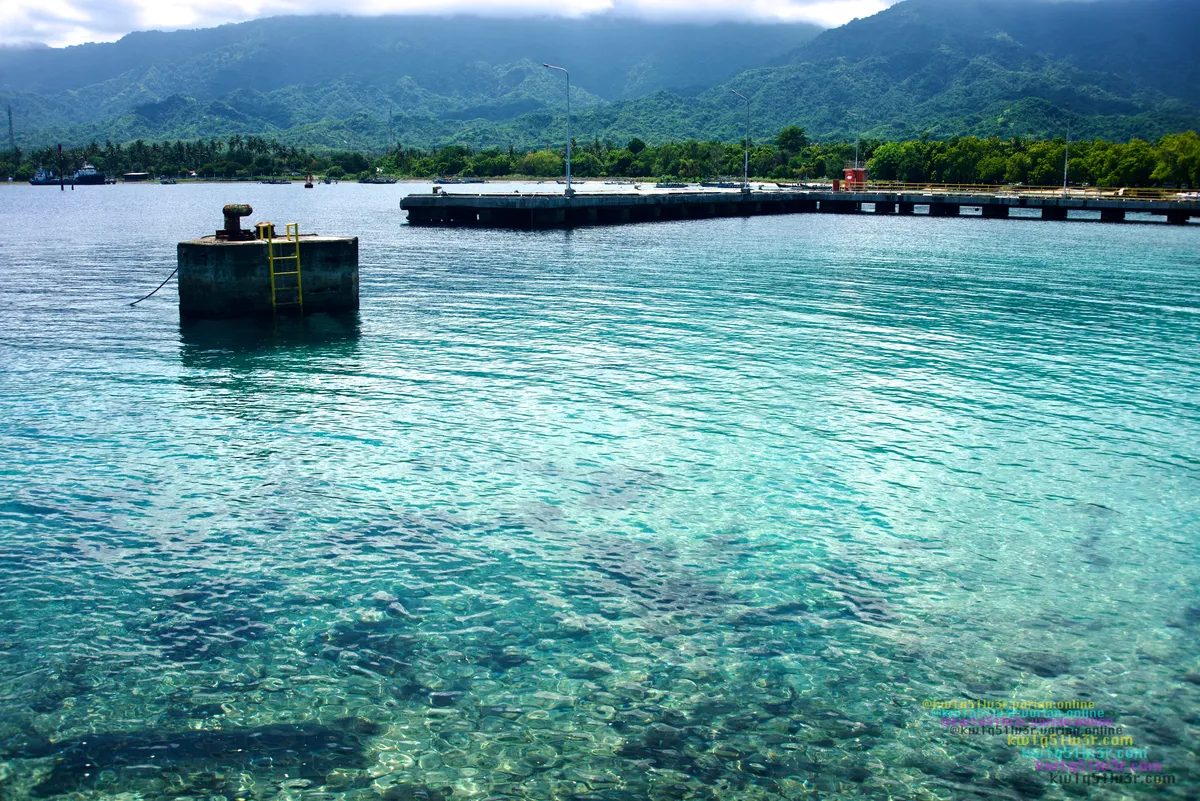
Clear, azure waters slosh in a harbour, with mountains in the background disappearing into clouds. Port of Celukan Bawang, North Bali, 31st December 2025 |
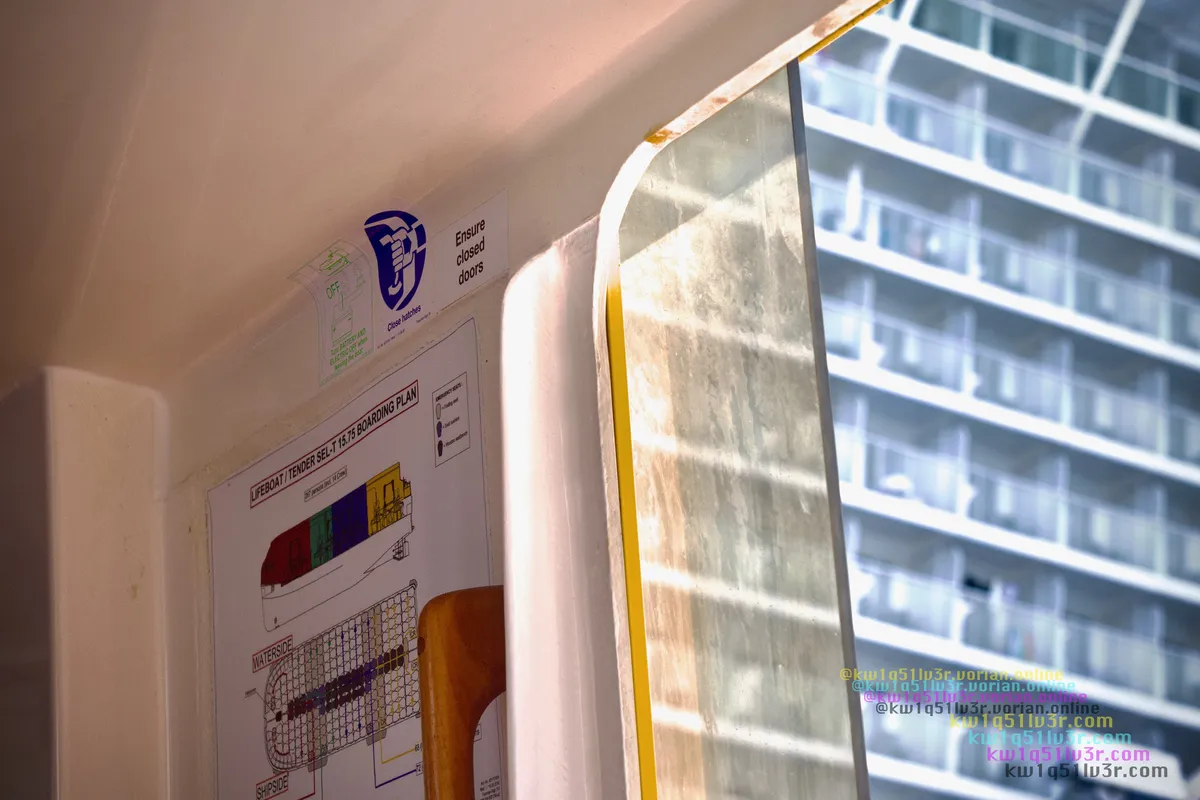
the inside edge of a doorway of a Fassmer SEL-T 15.75 lifeboat tender, framed against a background of balconies on the MV Ovation of the Seas. Off the coast of North Bali, 31st December 2025 |
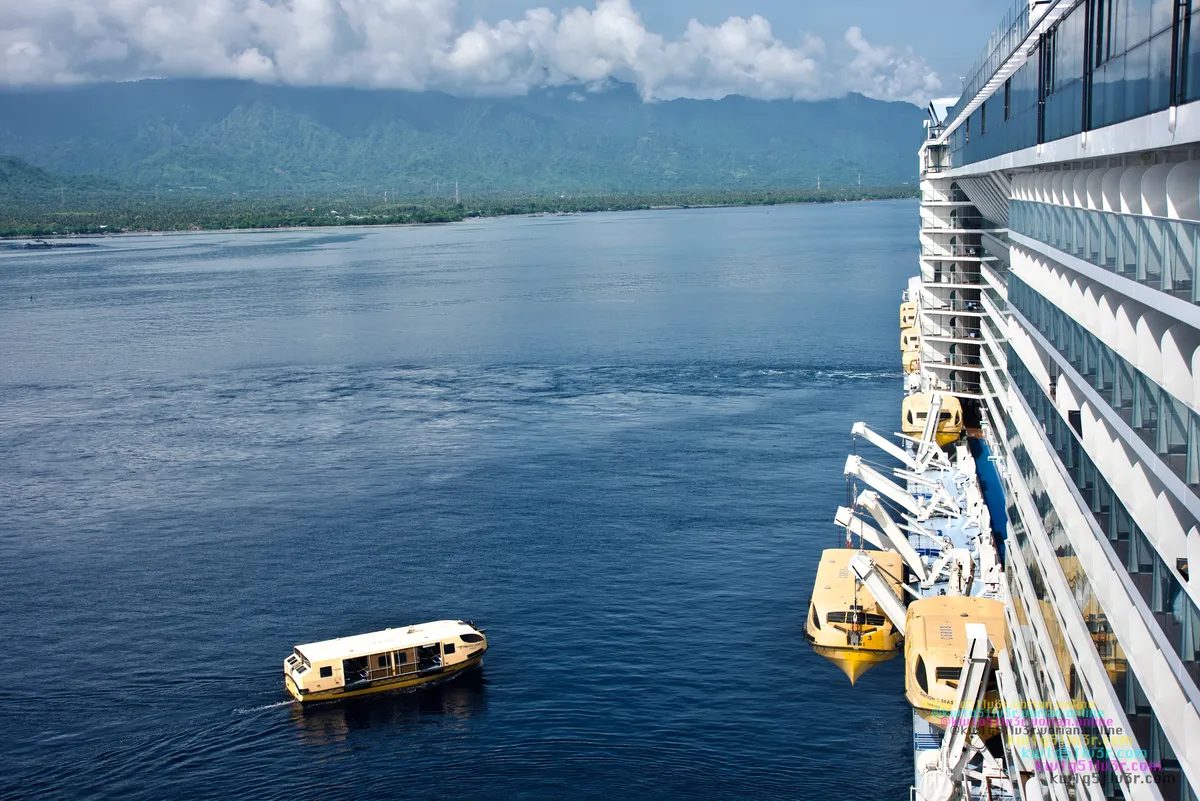
a row of lifeboat tenders line the side of the MV Ovation of the Seas, one is hanging off extended davits, and another is in the water. Off the coast of North Bali, 31st December 2025 |
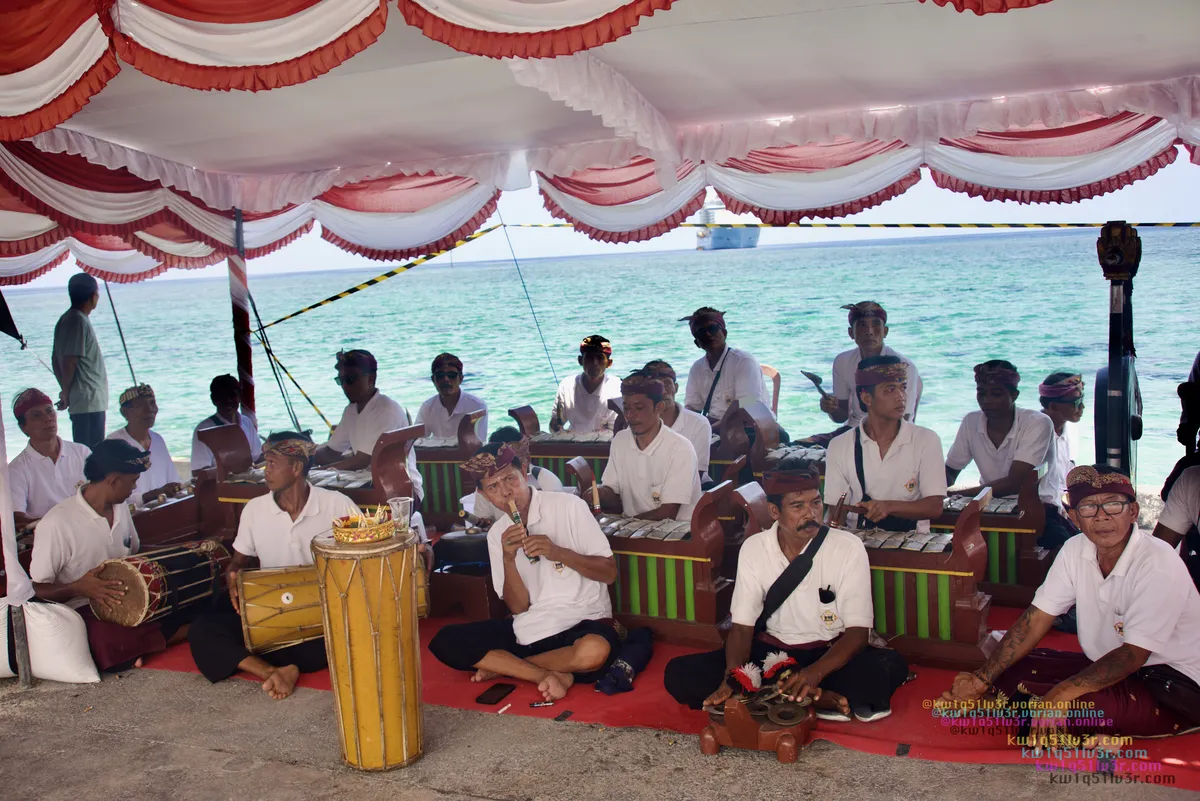
Gamelan troupe. Port of Celukan Bawang, North Bali, 31st December 2025 |
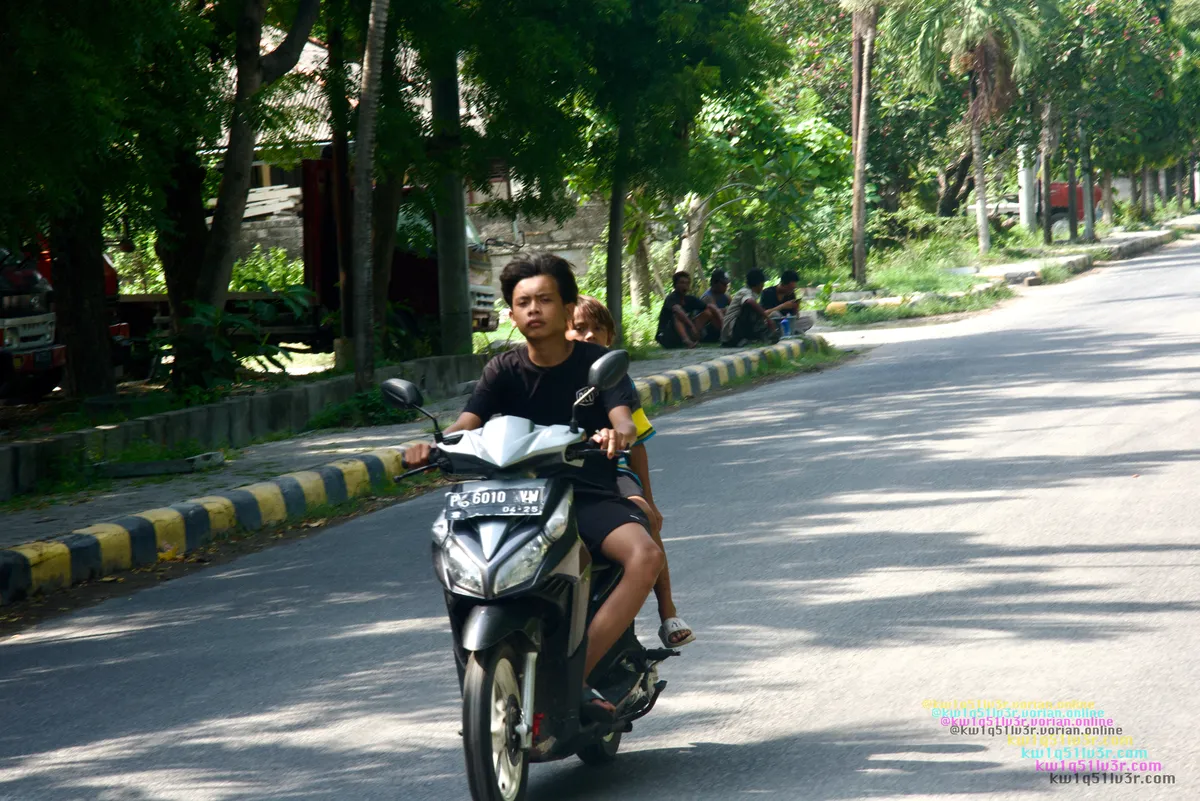
A teenage boy carries his brother pillion on a scooter, wearing the hardest album cover expression on his face. Jalan Pelabuhan Celukan Bawang, North Bali, 31st December 2025 |
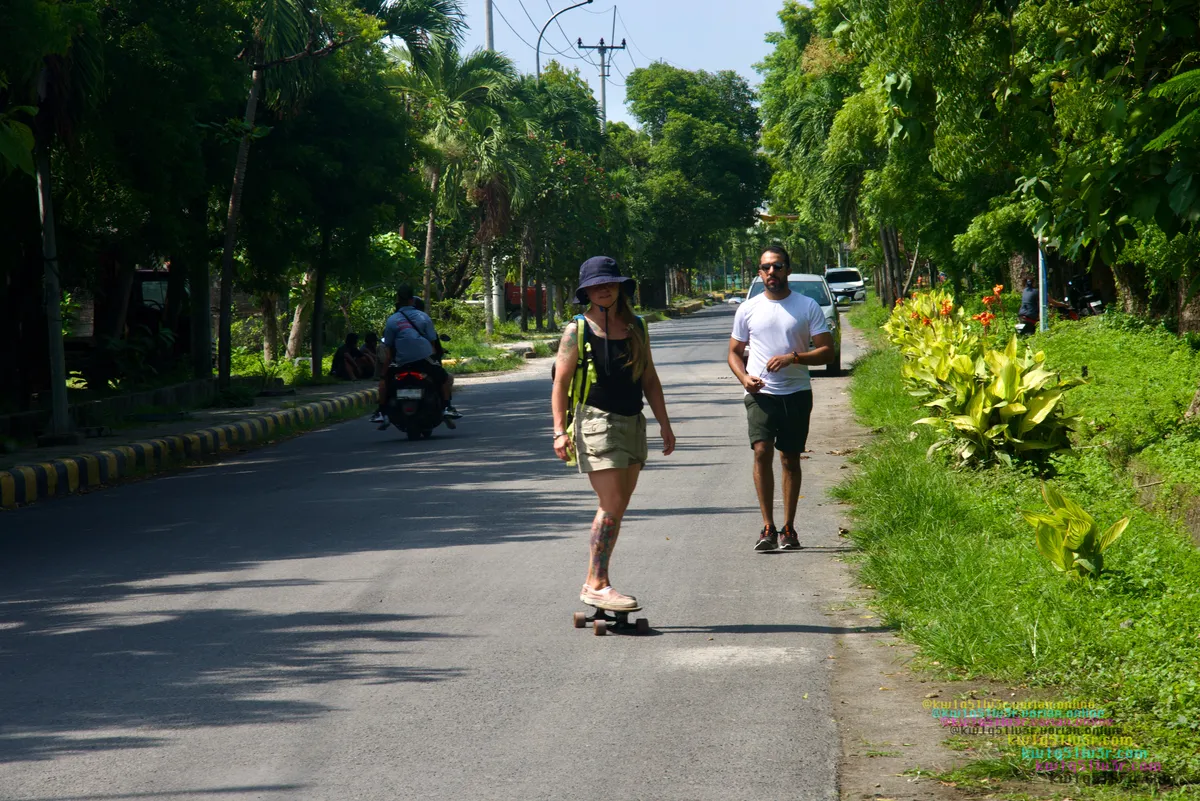
A woman has fun riding her cruiser board down the road while her companion follows behind, stowing his earbuds. Jalan Pelabuhan Celukan Bawang, North Bali, 31st December 2025 |
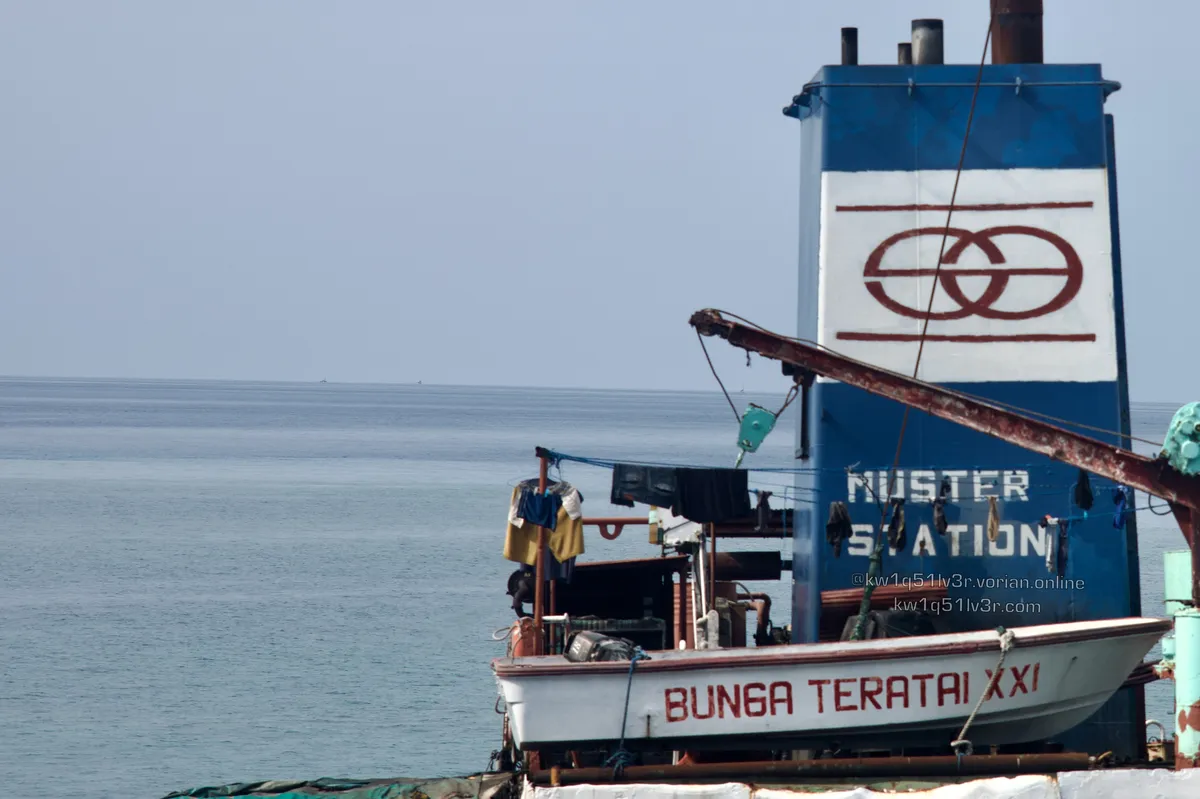
View of clutter built upon the muster station and lifeboat of the MV Bunga Teratai XXI. Port of Celukan Bawang, North Bali, 31st December 2025 |
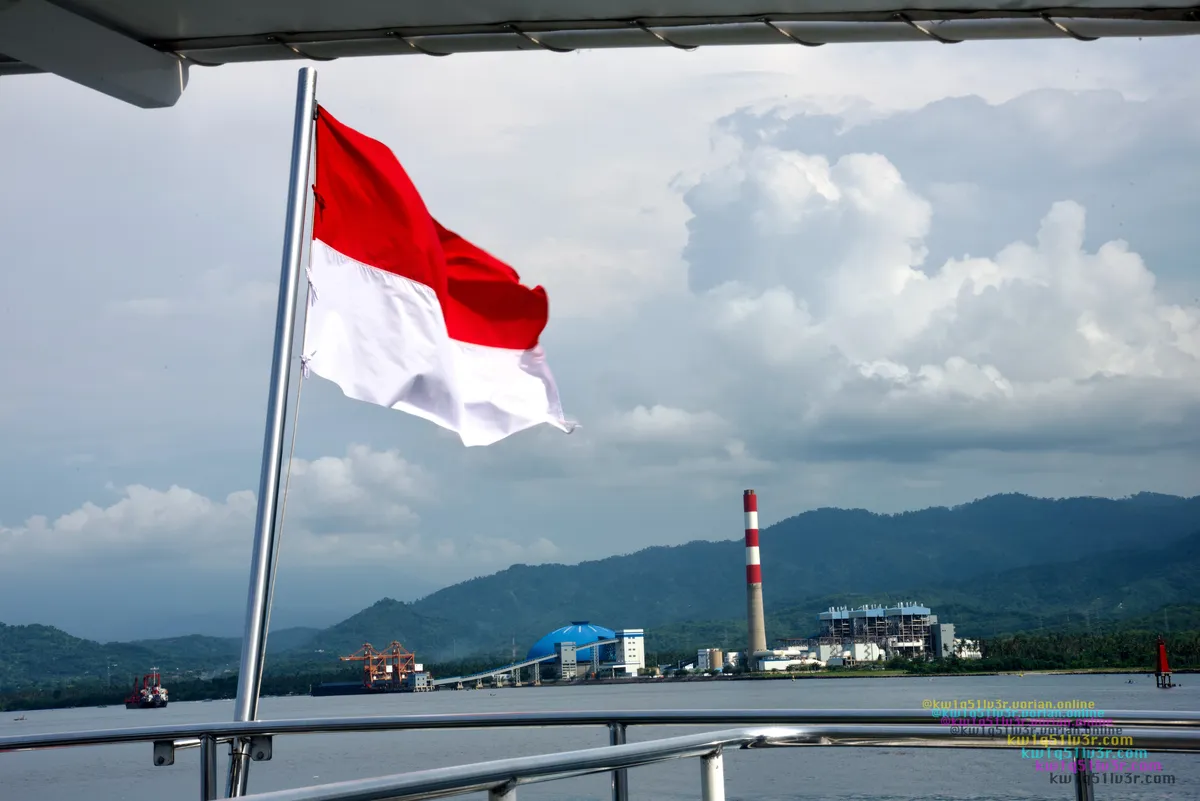
view from the back of a passenger ferry, looking back at a power plant on the north coast of Bali with the Indonesian flag waving in the wind. 31st December 2025 |
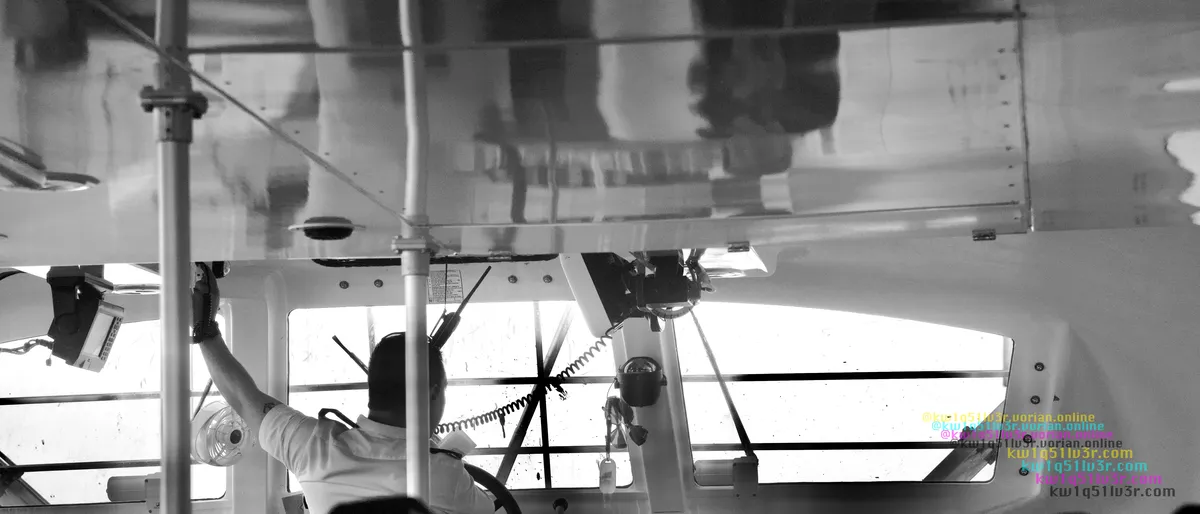
A crew member operates a Fassmer SEL-T 15.75 lifeboat tender. MV Ovation of the Seas, off the coast of North Bali, 31st December 2025
Waking with the sunrise as the ship slowly drifts into port is a sublime experience. The waves actually break early off the barrier islands on the outside of Benoa Harbour, so I could clearly hear the surf breaking on the underwater coral reefs as I leaned on the balcony railing. We washed up, got a leisurely breakfast at the quiet buffet place, and got off the ship.
That's when we finally got an understanding of the Tourism industry at work, and put the previous day's experience with the driver into perspective. I'd seen a few drivers waiting up and down the roadside looking for passengers in Celukan Bawang, but they were much more organised in Benoa. After we passed through security in the cruise terminal building, we exited into a crowded pick-up and drop-off area filled with touters and pop-up stores. They were quick to suggest itineraries and attractions to visit and a wholesale price to pay when we approached them; a hundred american for a private car, or about 1.6 million Rupiah, for five stops and lunch. We negotiated this lower, but given how they were directly charging both us and the crew 30 for a round trip to a nearby beach or 50 to Kuta or Denpasar proper, they were probably inflating their prices to account for us haggling them down anyway; talking to our shipboard dinner staff later revealed that these driver agencies had basically doubled their price in the past few years.
Our first stop was the Vihara Satya Dharma, a Buddhist, Taoist, and Confucianist temple built by the Chinese immigrant population. Located on the port highway, it serves as a prime place of prayer for travelers and sailors disembarking in Benoa Harbour. The Chinese have been coming to Bali for centuries, possibly over a millennium, for trade and settlement, and were one of the few Chinese populations in Indonesia whose cultural expression was less heavily-suppressed during the New Order dictatorship under Suharto.
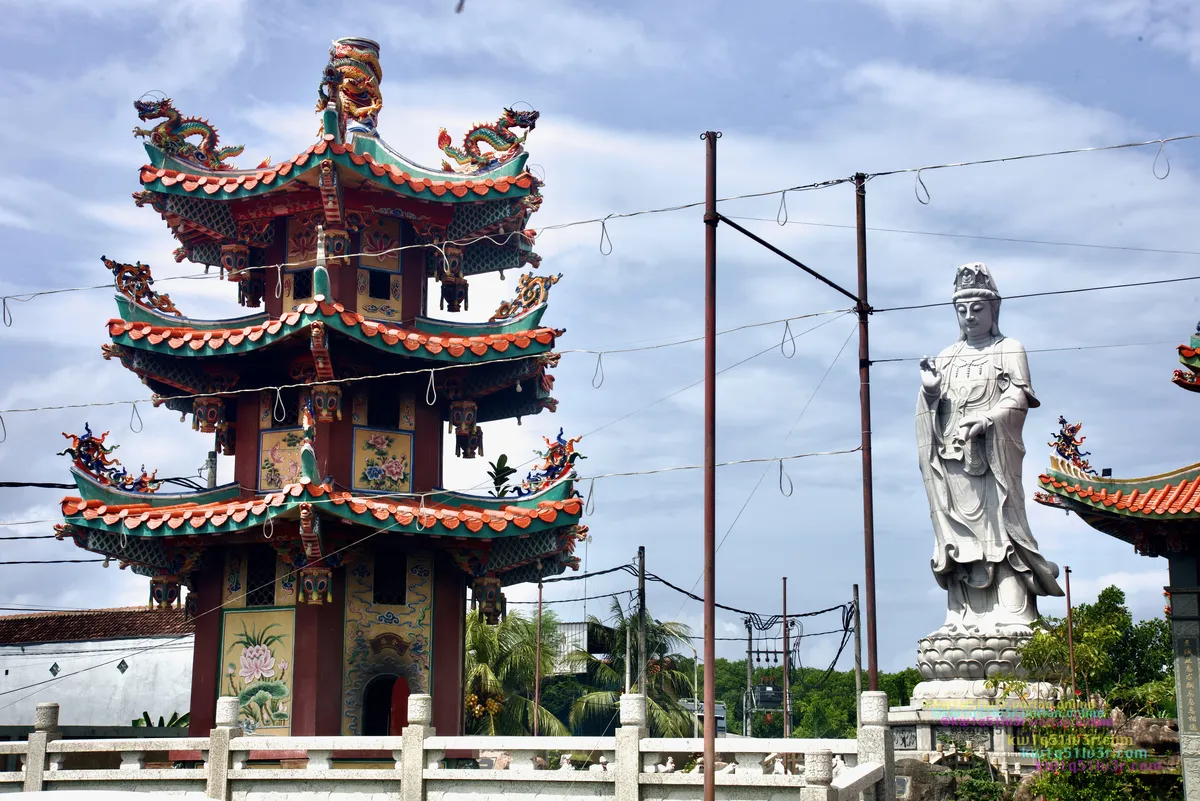
Boddhisatva statue and lotus pavilion, Vihara Satya Dharma, Benoa, Bali, 1St January 2026 |
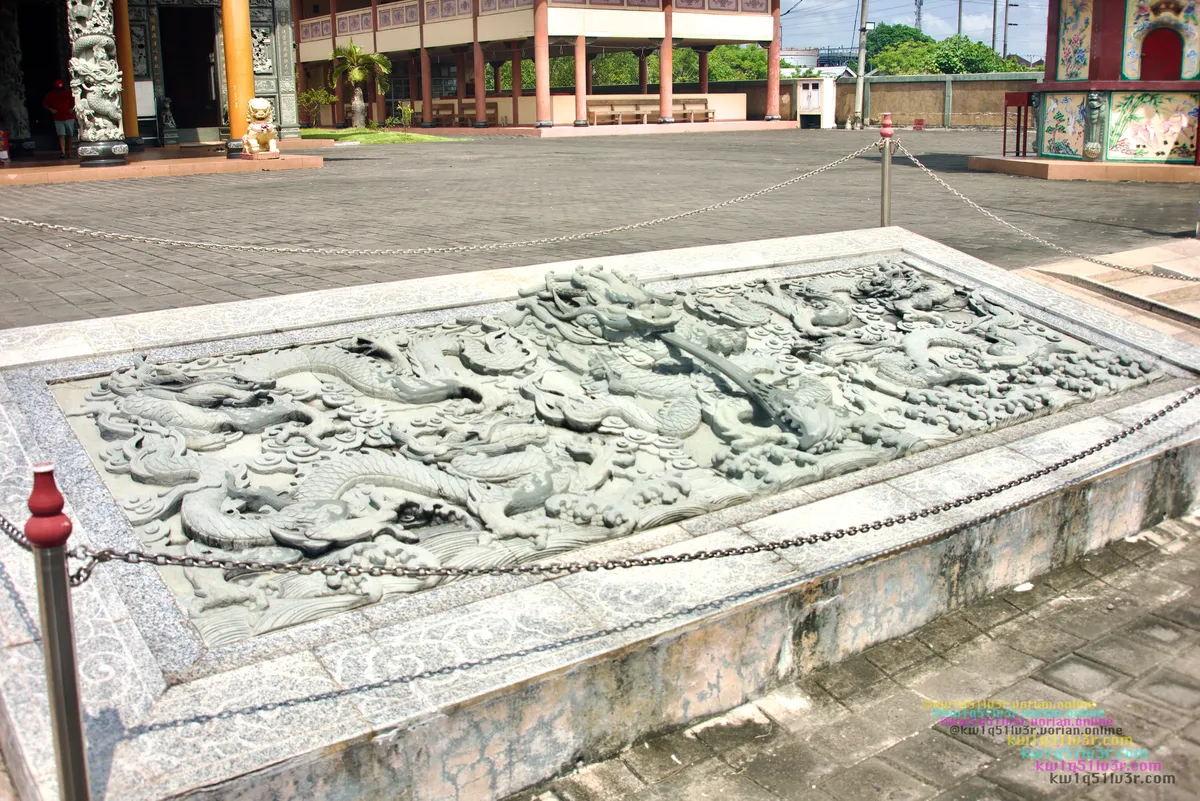
Ceremonial mural, Vihara Satya Dharma, Benoa, Bali, 1st January 2026 |
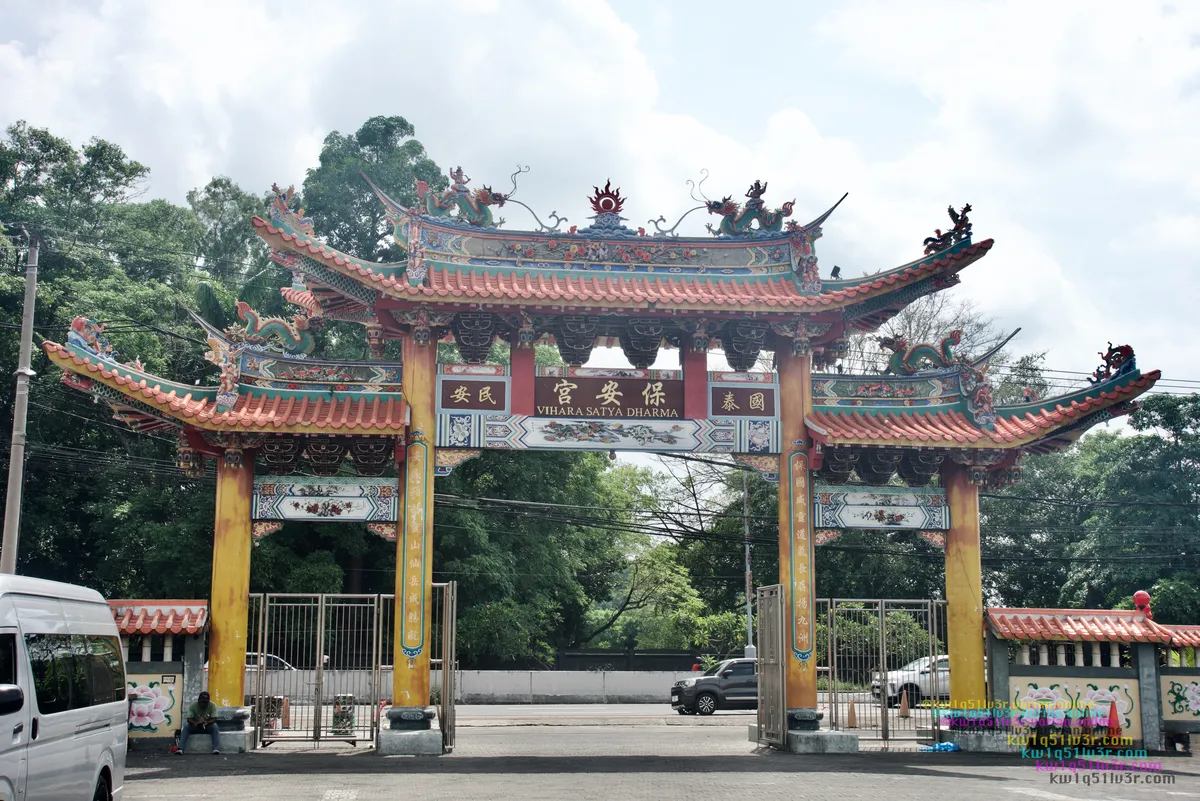
Entrance gate, Vihara Satya Dharma, Benoa, Bali, 1st January 2025 |
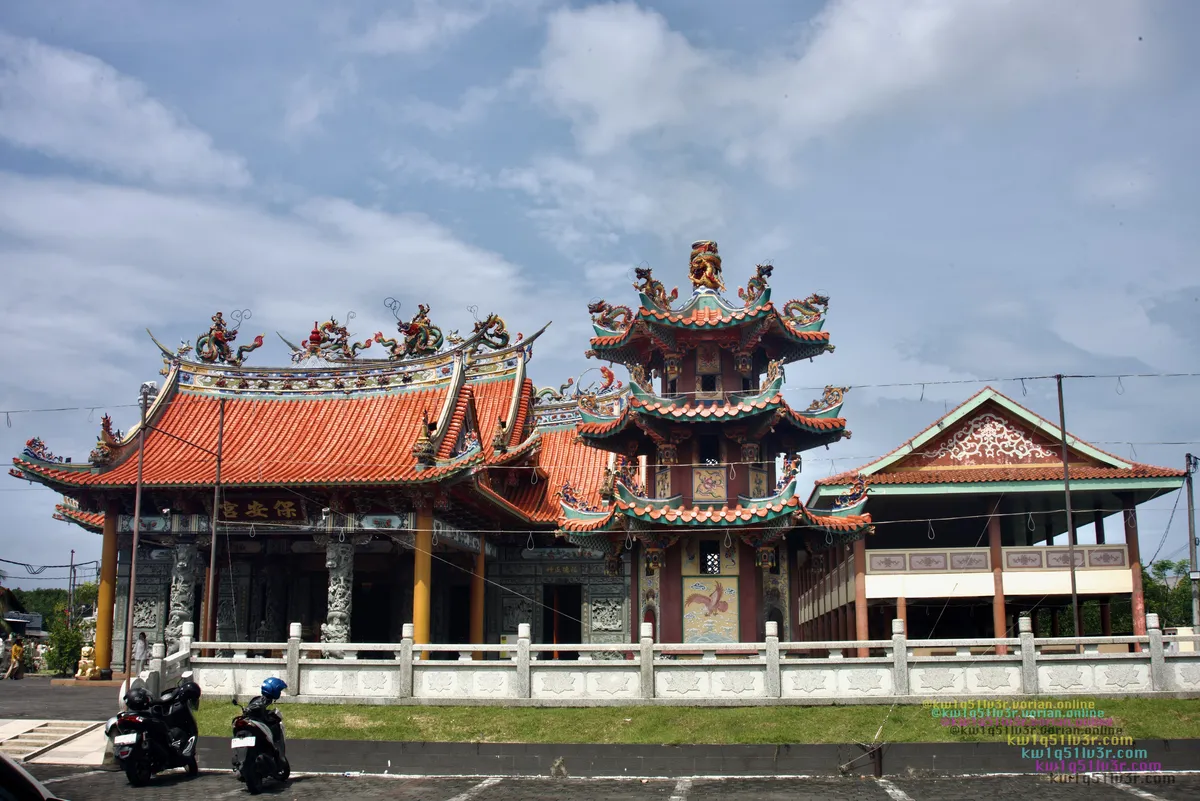
Ceremonial and assembly halls behind lotus pavilion, Vihara Satya Dharma, Benoa, Bali, 1st January 2025 |
We then stopped by textile and silversmithing workshops. Balinese artisan culture is very geographic; each village or town specialises in its own craft. The textile workshop was located in a village that was known for its weaving, and the silversmith as well was located in a village specialising in jewelry. Along the way we also drove through villages that specialised in painting, masonry, the metalworking of bells for Balinese Gamelan music, the performance of said Balinese Gamelan, and other arts.
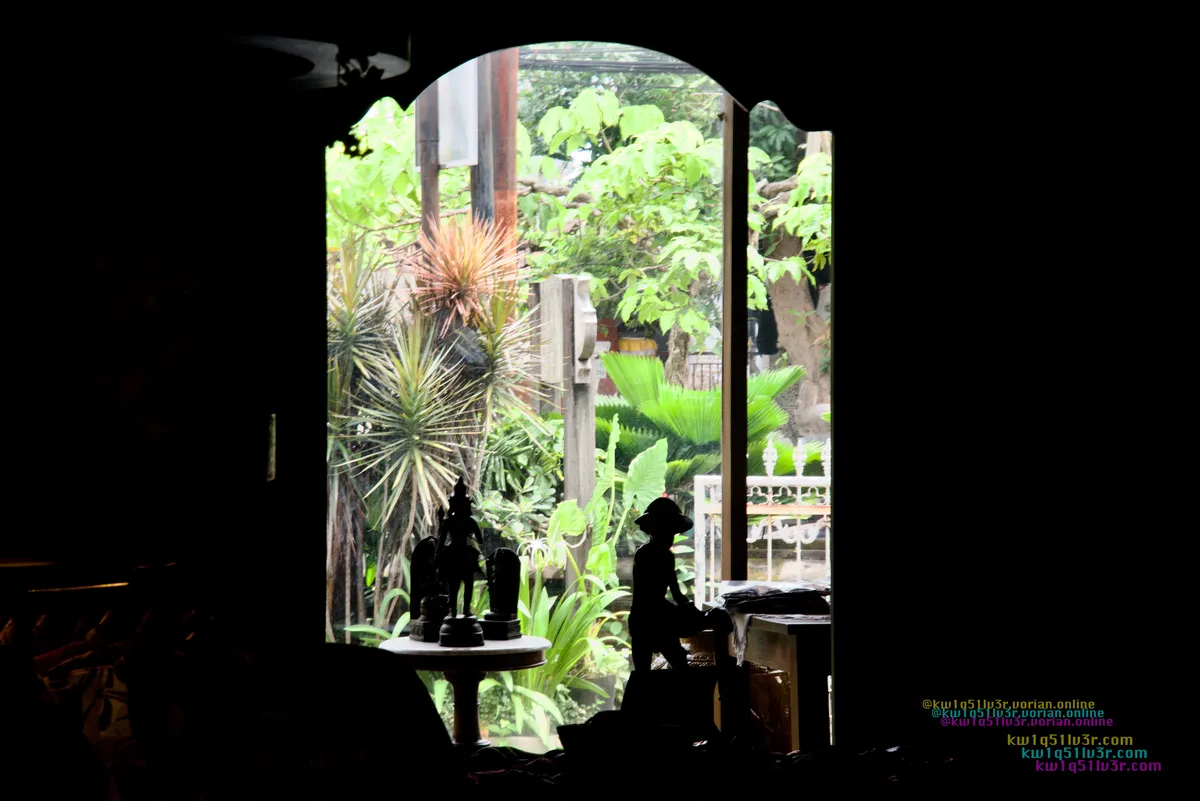
View of a garden through the silhouette of a doorway and statues. South Bali, 1st January 2026 |
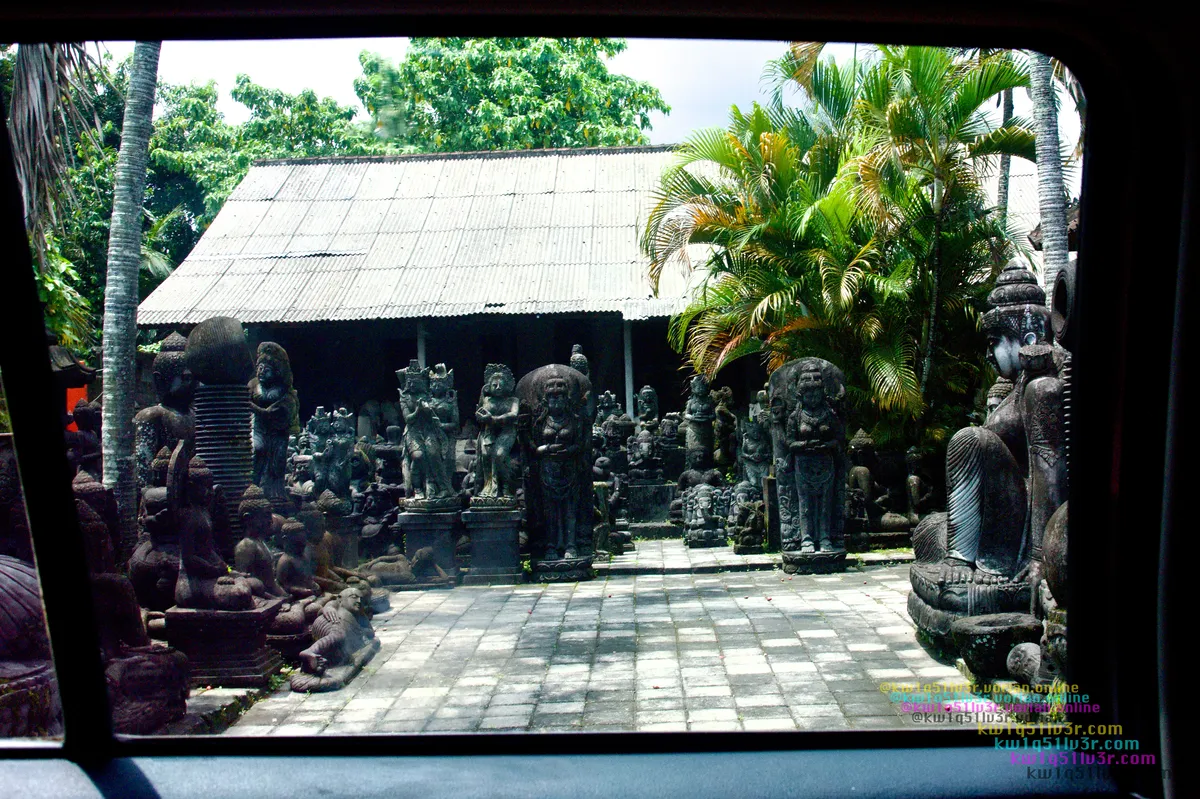
Freshly-carved statues on display in a courtyard, seen through the frame of a car window. South Bali, 1st January 2026 |
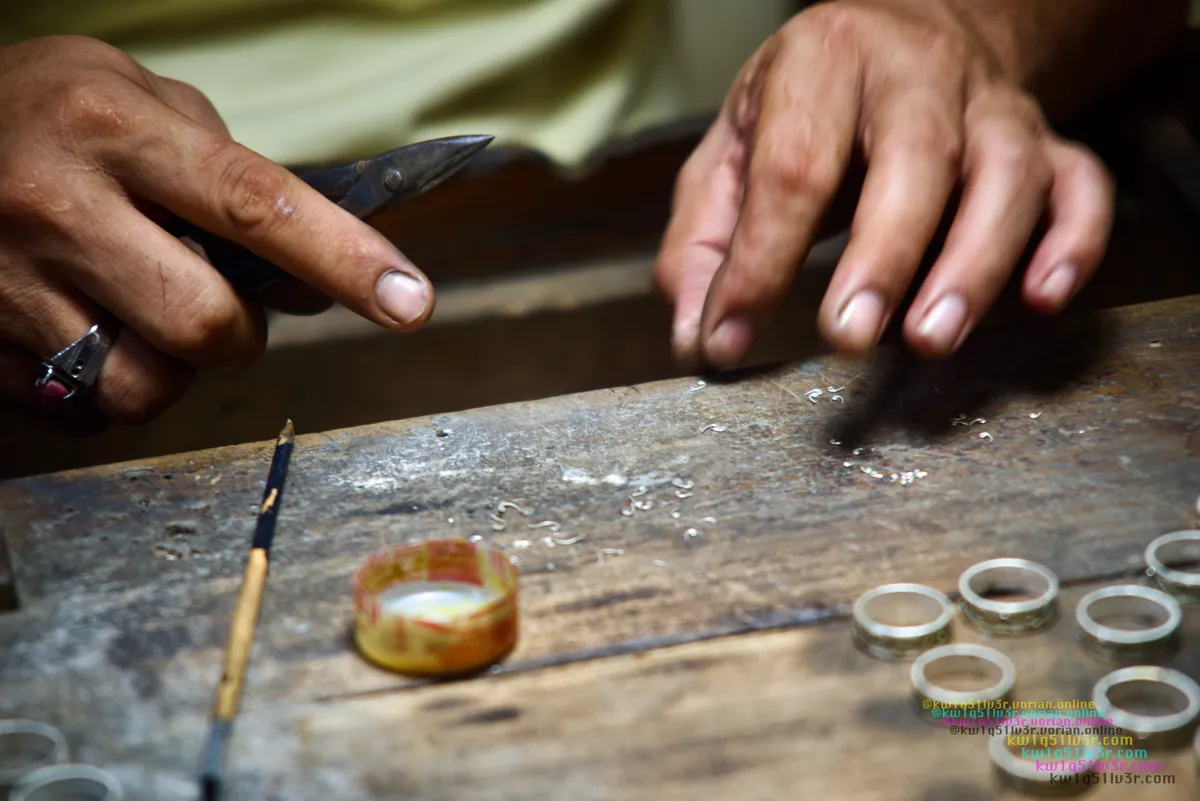
A craftsman works on silver filigree. Nadia's Silver, Singapadu, Gianyar Regency, Bali, 1st January 2026 |
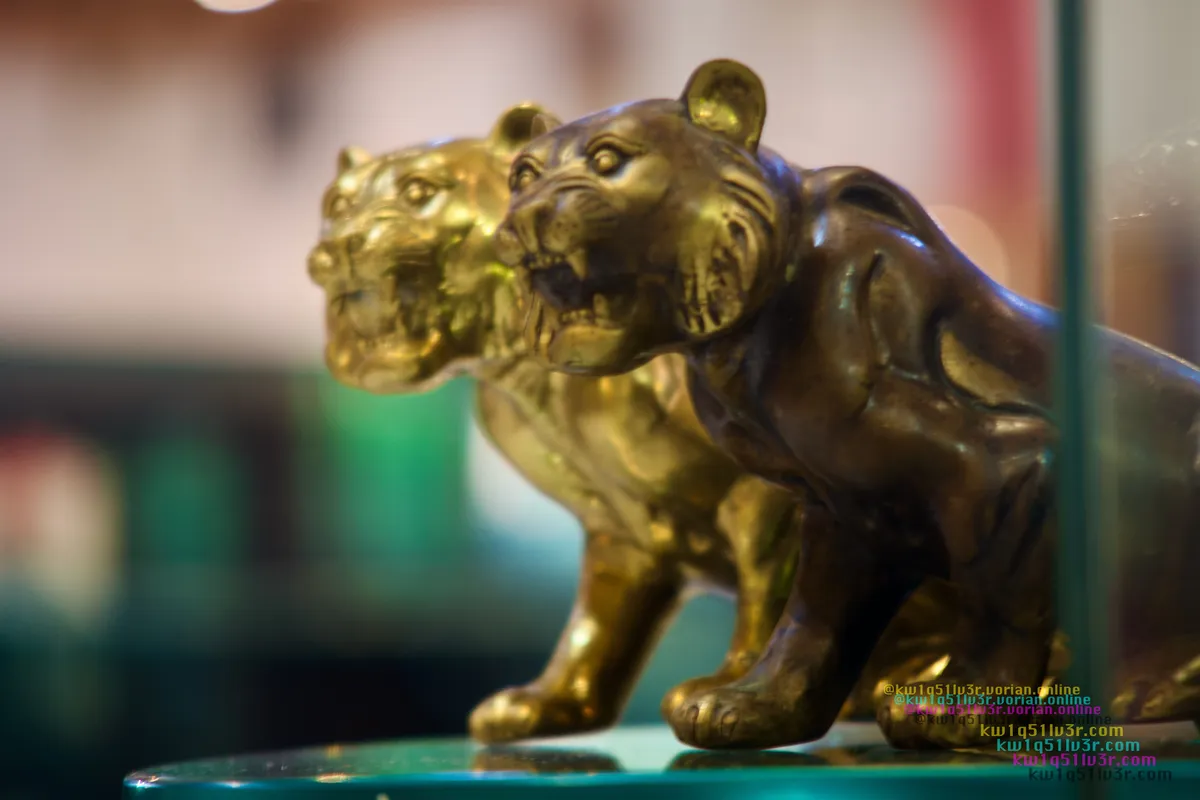
Twin brass tiger sculptures. Nadia's Silver, Singapadu, Gianyar Regency, Bali, 1st January 2026 |
We had a late lunch and needed to get back to the ship earlier, so we decided upon only one more stop. This was a traditional Balinese family household. This is when our driver once again came in clutch, explaining to us the traditions of their specific variety of Hinduism, how they organise their homes, and how they live their lives. A lot of them still use firewood for cooking, in an enclosed kitchen on the south side; each cardinal direction is reserved for houses for different specific members of each family or different specific activities. It was rather interesting short look into an unfamiliar lifestyle, and I'm glad I had the opportunity, even if it were just a preagreed tourism stop between the driver agency and the family. I tipped them handsomely for letting me do in their house what I would heavily hesitate to let others do in mine.
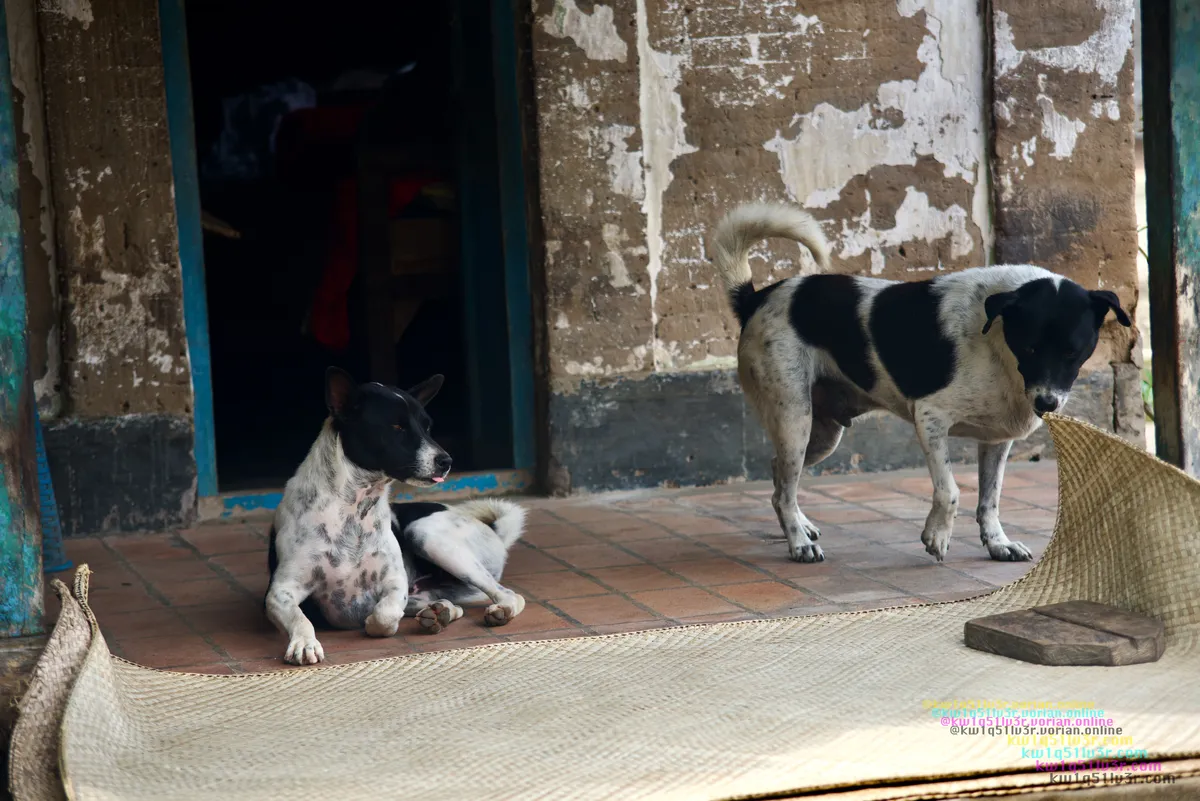
Two pets lounge on a patio after realising the photographer is not a threat. South Bali, 1st January 2026 |
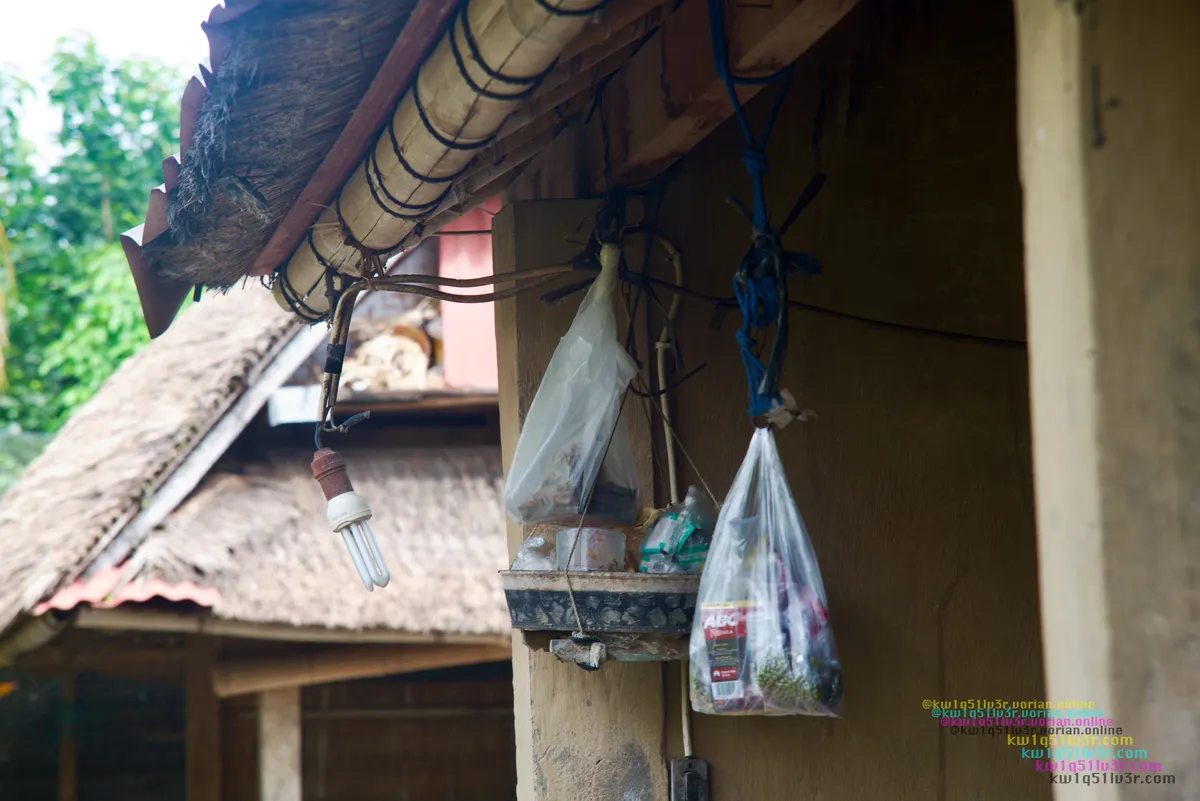
household goods hung for storage. South Bali, 1st January 2026 |
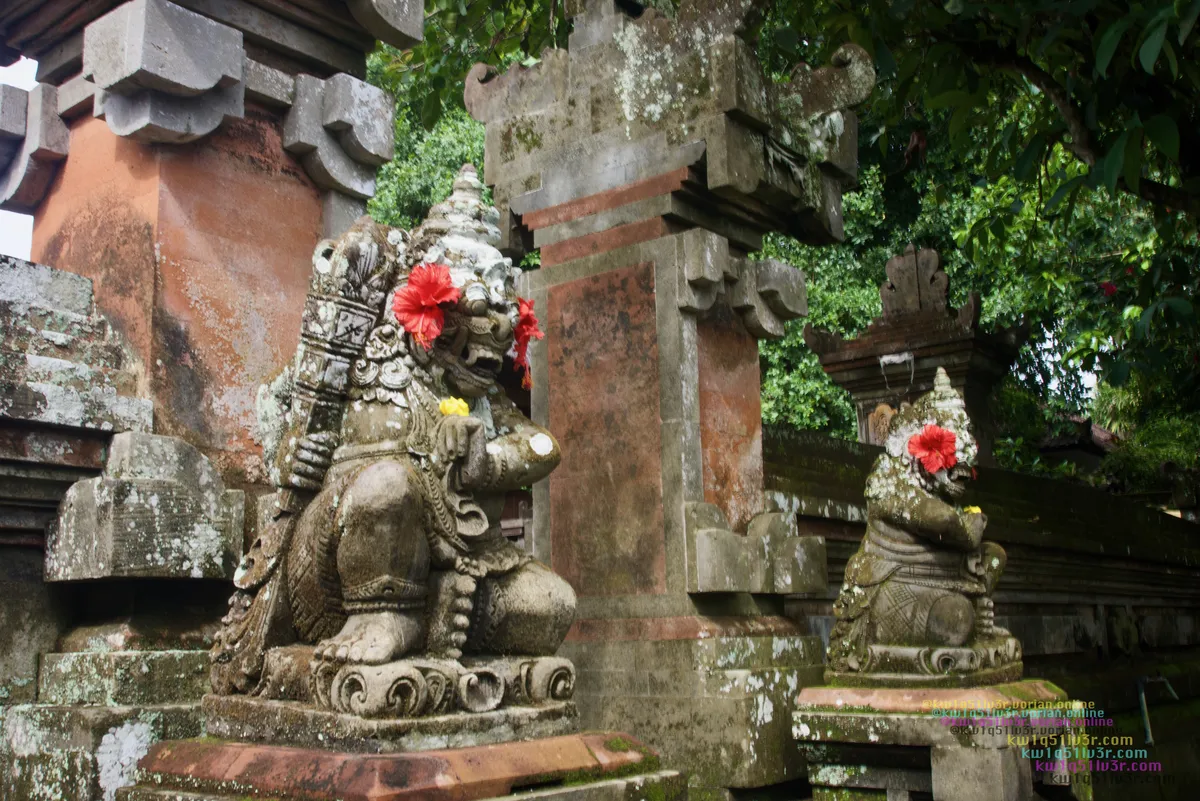
Statues at the entrance to a household Hindu shrine decorated with flowers in their ears. South Bali, 1st January 2026 |
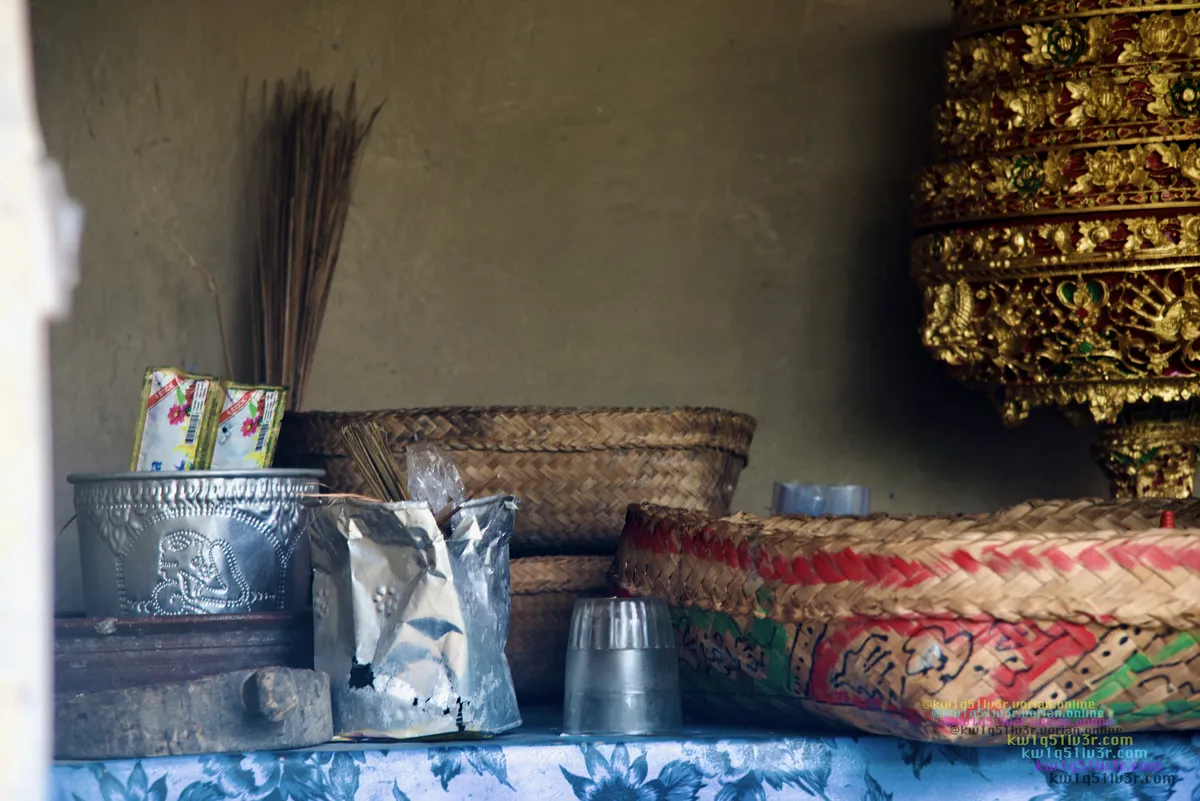
Household supplies for preparing daily offerings to Hindu deities and spirits. South Bali, 1st January 2026 |
In between destinations, we asked our driver about the tourism and how for example the arrival of a big cruise ship affects things in Bali; I'd heard the story a few times online, but it seemed prudent to get a local to tell me directly. Unsurprisingly, there were lots of economic pressures that had already existed for decades pushing locals from their traditional and ancestral jobs into the tourism service industy, and things were always getting more and more expensive because of the constant inflow of comparatively rich foreigners.
While my mom watched a stage show after dinner, I went back to the cabin intending to rest and wash up, but got distracted by the ample night photography opportunities, including planes landing at Ngurah Rai International, and the almost constant fireworks happening off Kuta Beach, which I could see from the ship despite being just over four kilometres away.
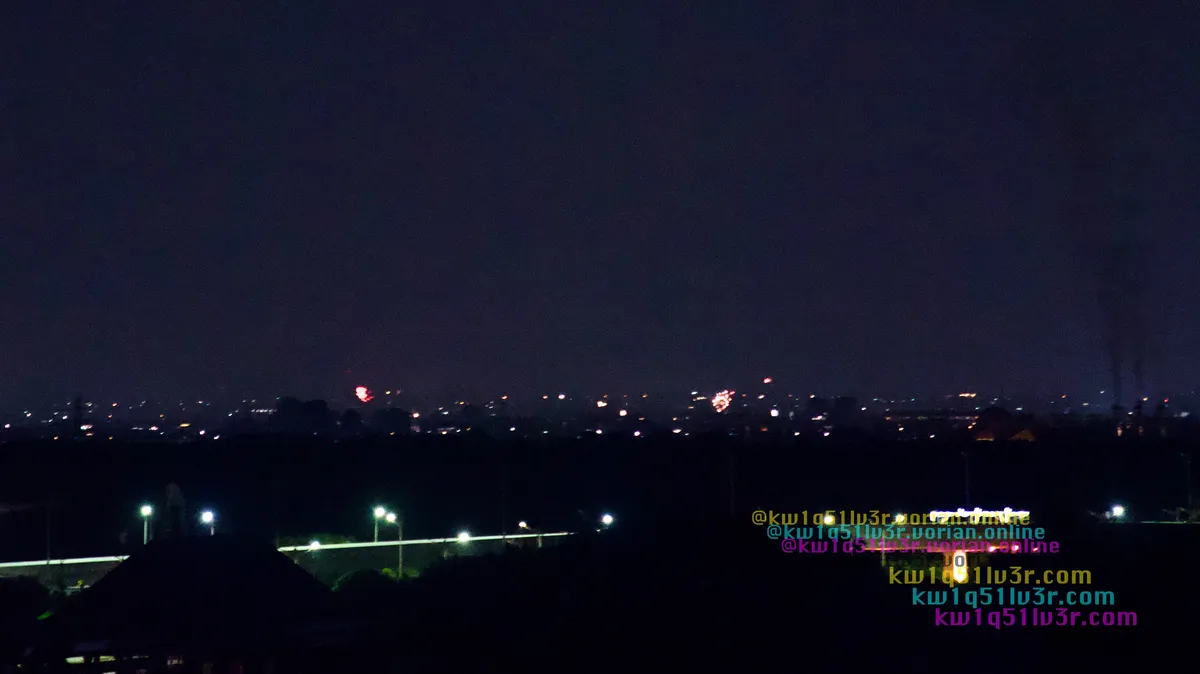
Fireworks off Kuta Beach, as seen from the MV Ovation of the Seas, docked at the Port of Benoa, South Bali, 1st January 2026 |
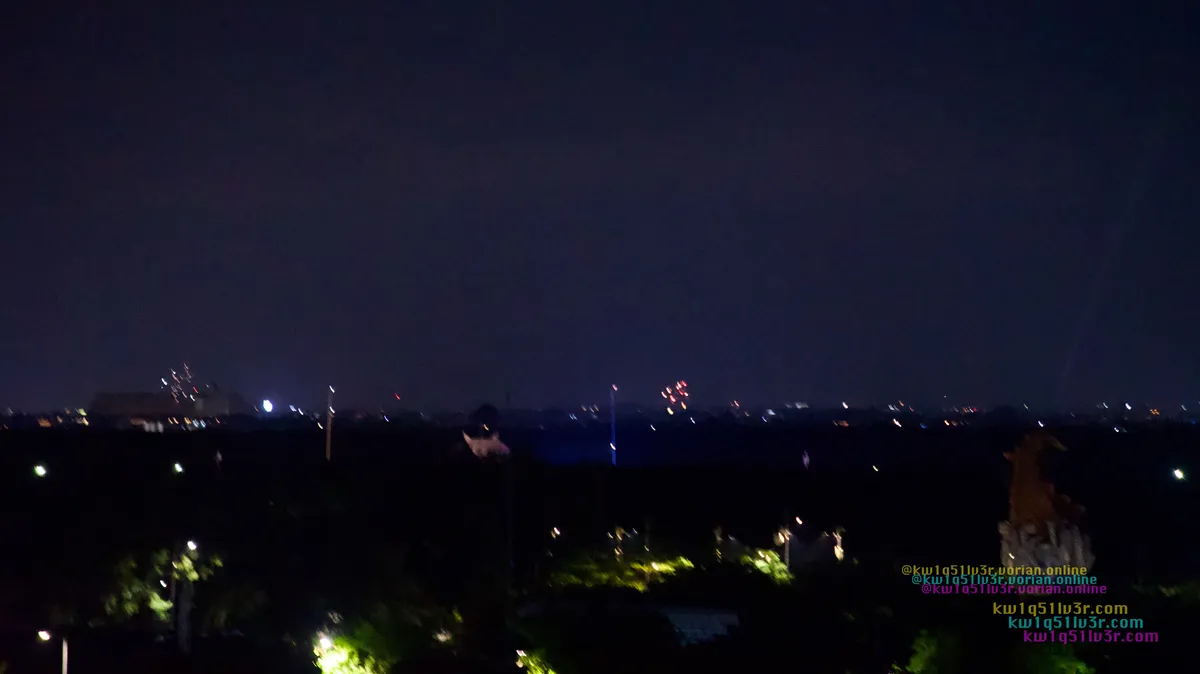
Fireworks off Kuta Beach, as seen from the MV Ovation of the Seas, docked at the Port of Benoa, South Bali, 1st January 2026 |
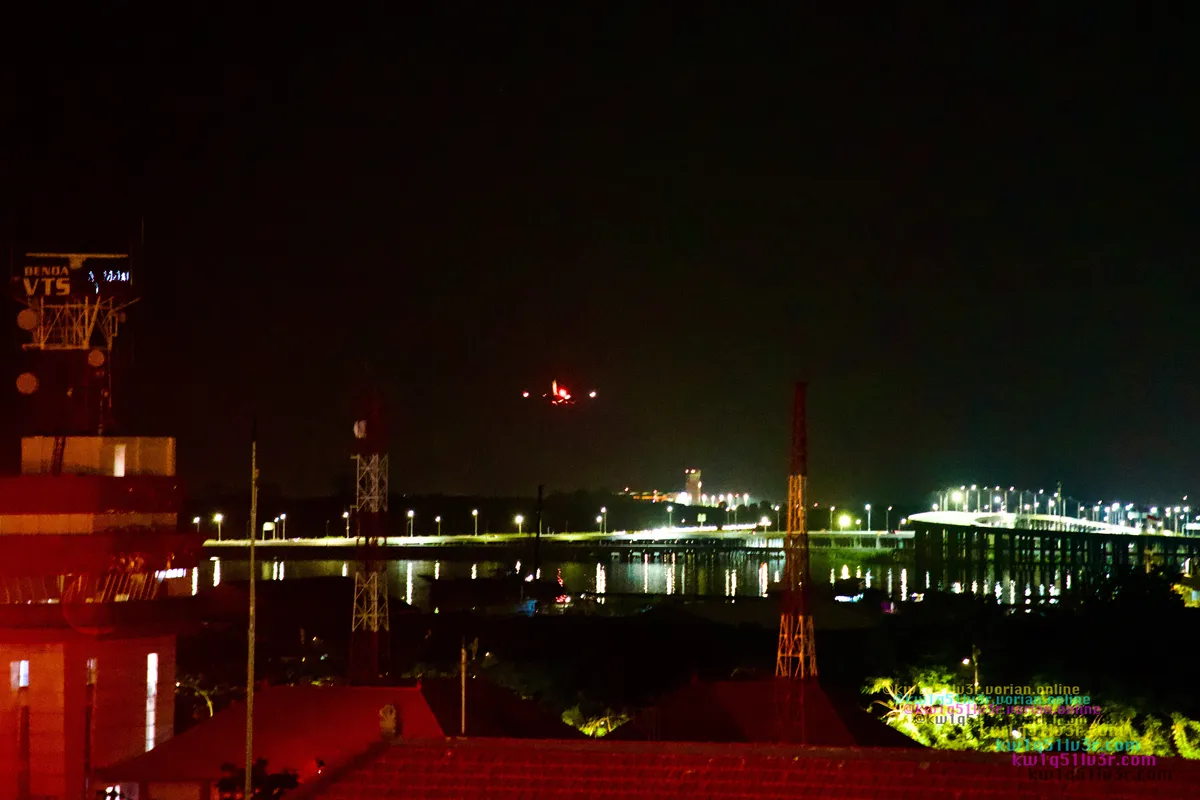
An airliner on final approach into I Gusti Ngurah Rai International Airport, as seen from the MV Ovation of the Seas, docked in the port of Benoa, Bali, 1st January 2026 |
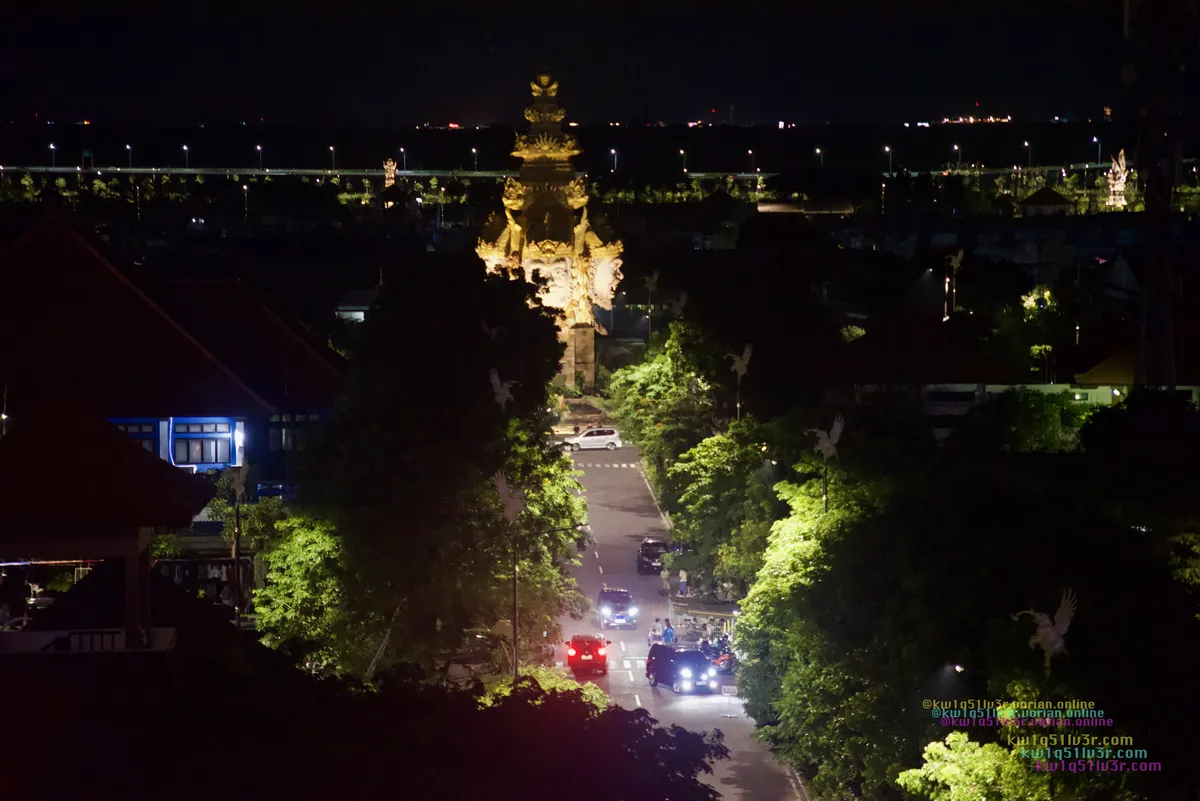
View down Jalan Dermaga II and Brahma statue in a roundabout in Jalan Raya Pelabuhan Benoa from the MV Ovation of the Seas, docked in the port of Benoa, Bali, 1st January 2026 |
The ship left late at night and arrived in the port of Gili Mas, on the island of Lombok, early the next day. We woke to beautiful views out our balcony.
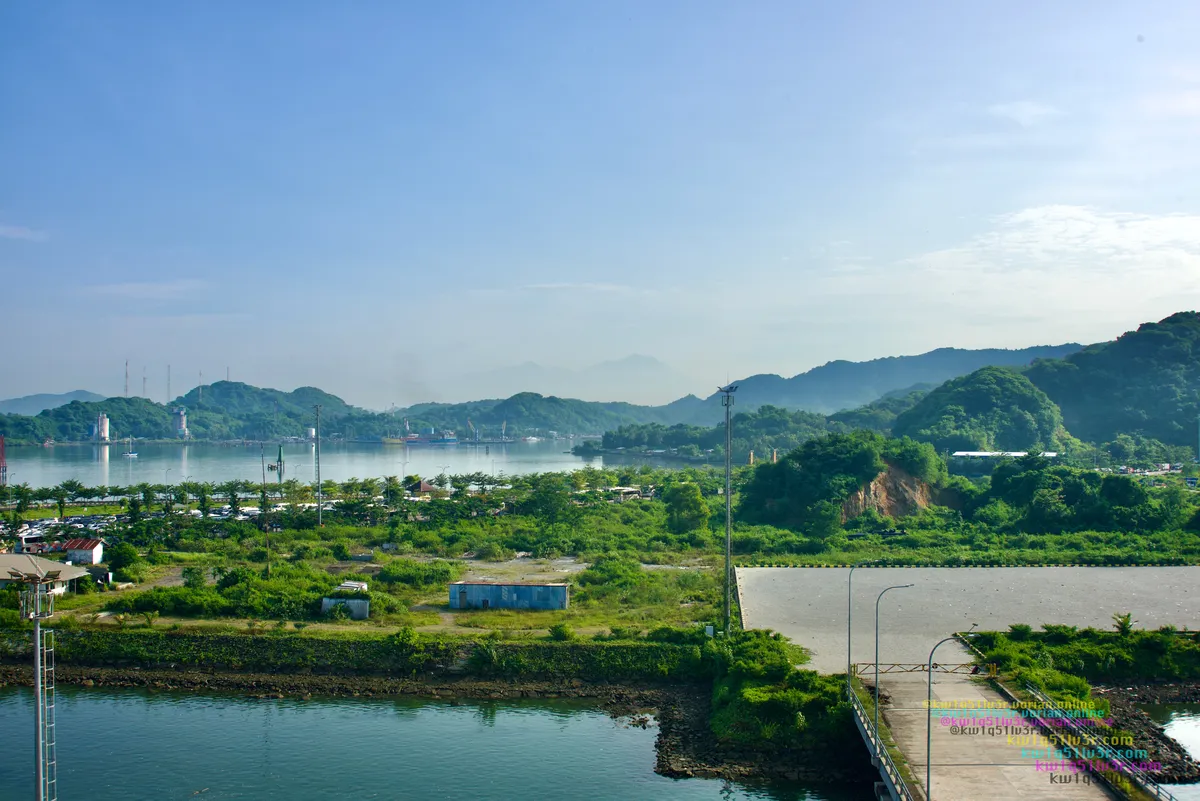
View of the Port of Gili Mas from the MV OVation of the Seas, Lombok, 2nd January 2026 |
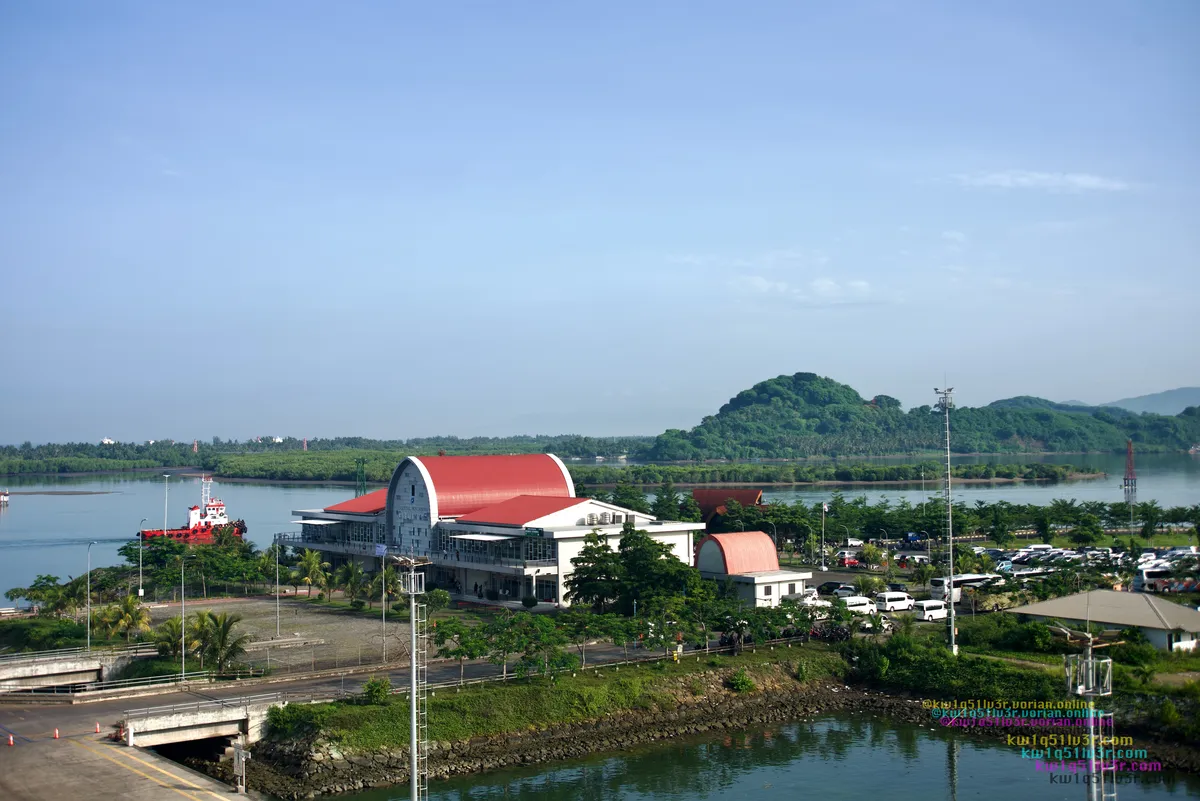
View of the passenger terminal at the port of Gili Mas, from the MV Ovation of the Seas, Lombok, 2nd January 2026 |
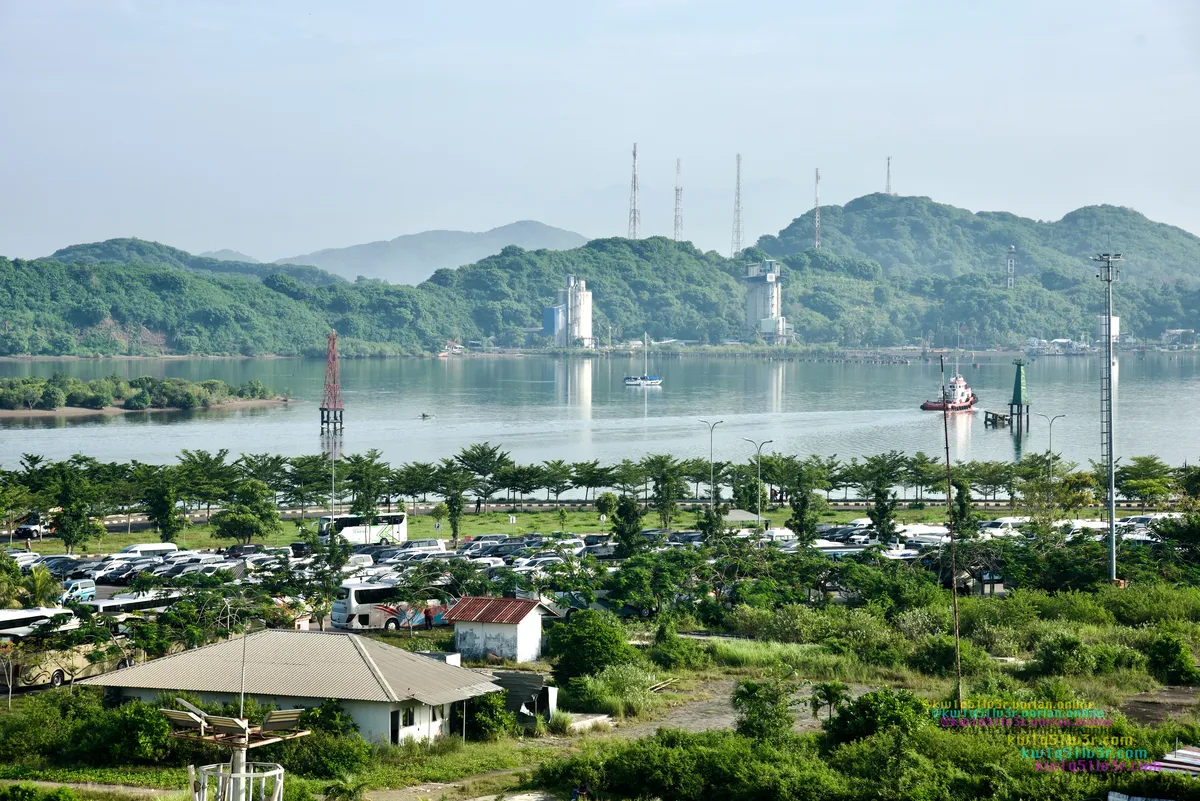
View of Lembar from the MV Ovation of the Seas, docked across the bay at the port of Gili Mas, Lombok, 2nd January 2026 |
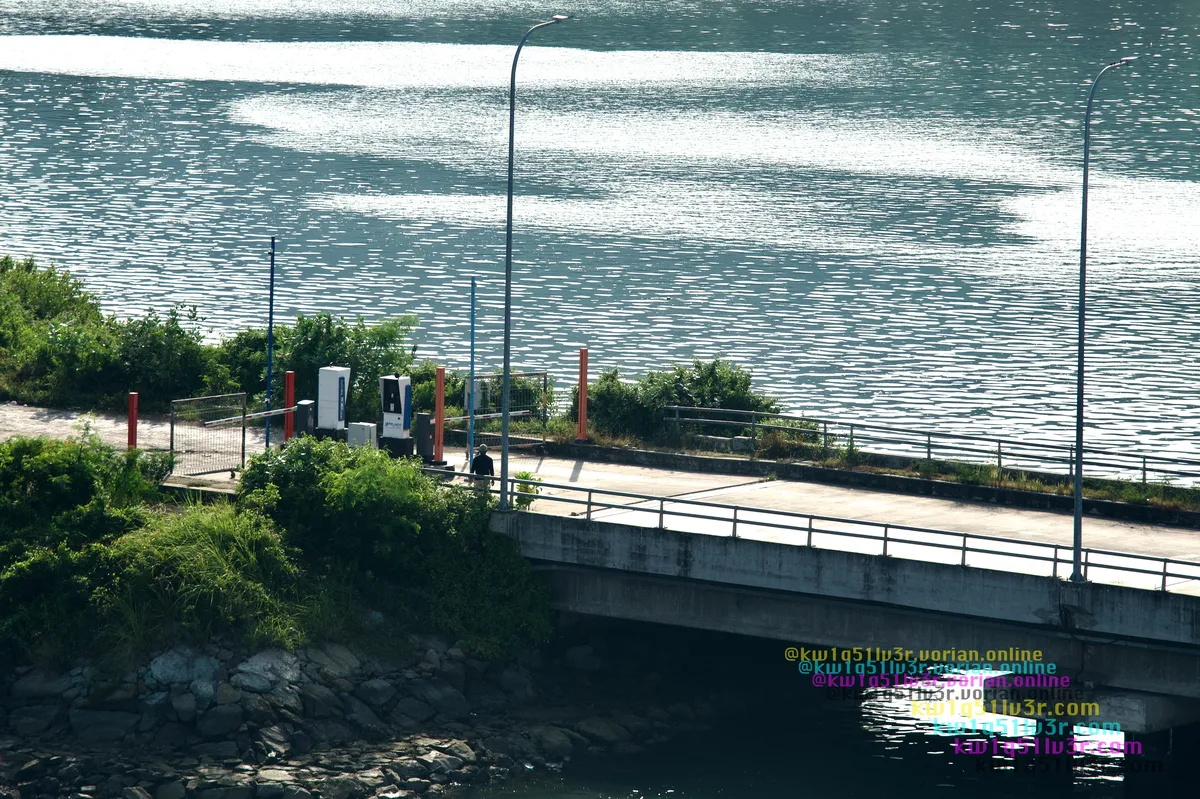
Security guard at gate, port of Gili Mas, Lombok, 2nd January 2026 |
The Regencies of Central and Western Lombok are a bit more densely-inhabited than North Bali, but certainly quite far from the crowd and bustle of Denpasar, of which only the city of Mataram compares closely. Directly across the bay from the port facility was the town of Lembar and its associated ferry terminal, which is the main point of connection between Lombok and the rest of Indonesia. There is an airport in Central Lombok, but understandably for the mostly rural population of the island, getting to ride a jetliner, even one run by a budget airline, is a luxury only worth fantasising about.
Speaking of: on Lombok, not only did we hire a private driver for our sightseeing tour, we were also accompanied by a tour guide. It was quite interesting talking to them, because my existing Indonesian friends as a function of my own interest groups trend towards being cosmopolitan and metropolitan. For me, this basically means that all of mine are Jakartan. Contrast this with my Balinese driver, who made sure to highlight Bali's distinctiveness from broader Indonesian culture; and my Lombok Islander hosts, who lived very local lives, only occasionally going to the provincial capital of Mataram, and only very occasionally going to Bali, where the existence of Jakarta doesn't matter a single lick to them. It was a good reminder as someone who likes to gravitate towards cultural and political urban cores that the lives and peoples of the rural periphery exist and deserve just as much consideration.
Lombok's primary industry is that of tourism these days, especially since the Mandalika Street Circuit was completed and started hosting the Indonesian Motorcycle Grand Prix, but that industry requires a whole bunch of others to prop it up; a few good examples are the weaving and pottery traditions of the indigenous Sasak people, as well as pearl cultivation. It's easy to wonder how they dealt with the heat without modern technology, until you're handed an insulated clay jug that they would trek up the mountains with to fill with cold spring water. The weaving workshop we visited was also set up for tourists; there were weavers out front demonstrating their craft in front of displays of their work, and off to the side of the shop were traditional Sasak houses set up for tourists to pose with.
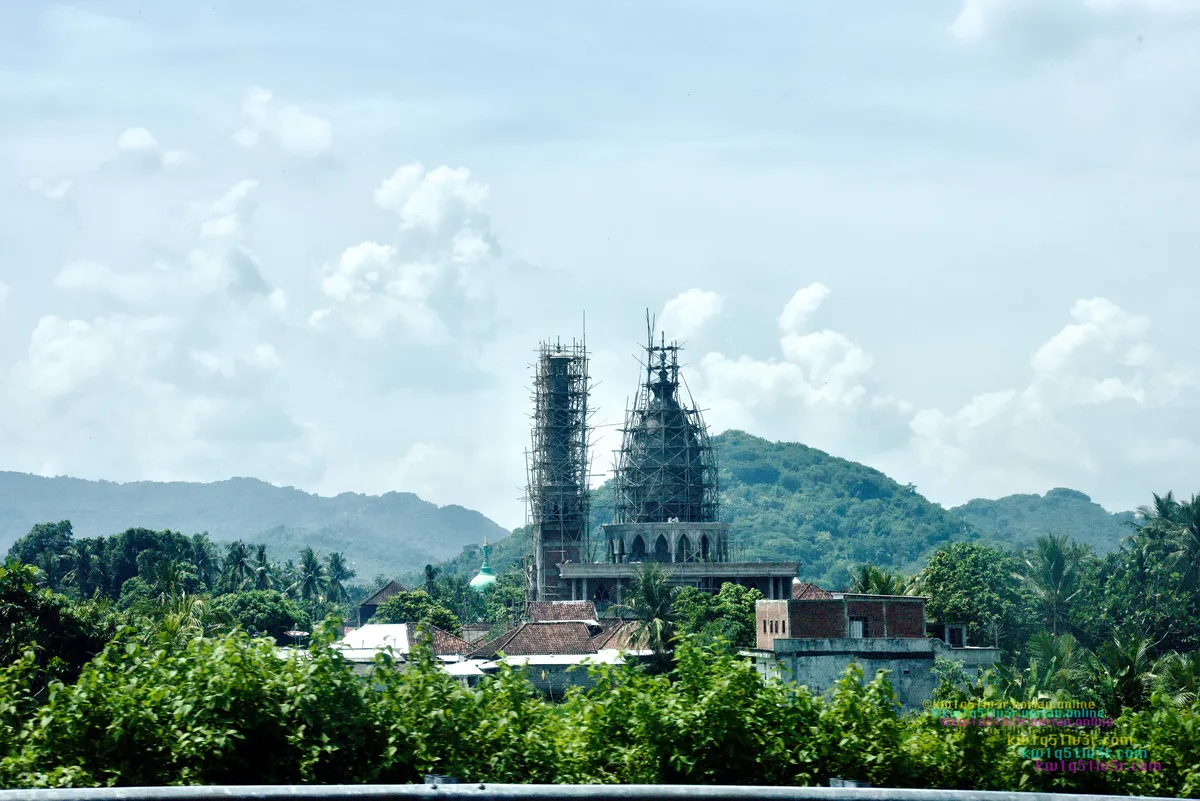
Mosque dome and minaret sheathed in scaffolding, nestled within a plain full of smaller buildings and palm trees, with lush hills in the background. South-east Lombok, 2nd January 2026 |
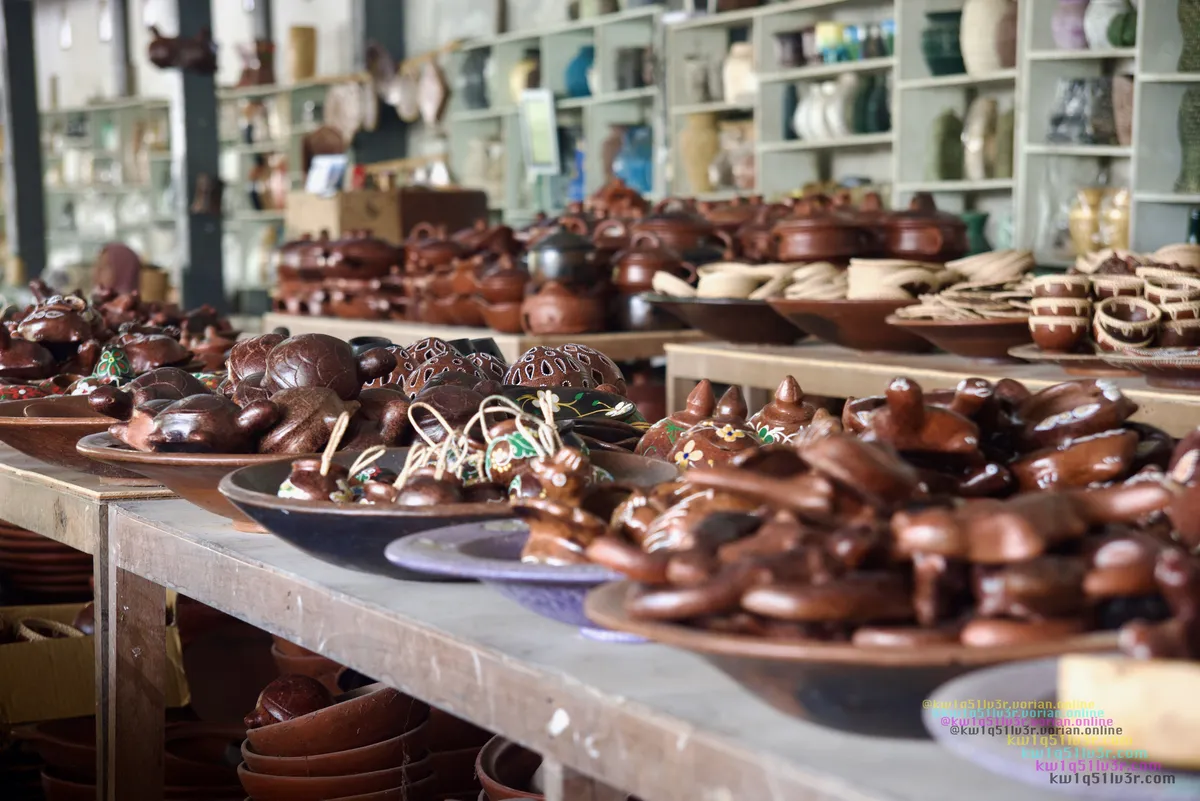
Pottery products for sale in a workshop. Southeast Lombok, 2nd January 2026 |
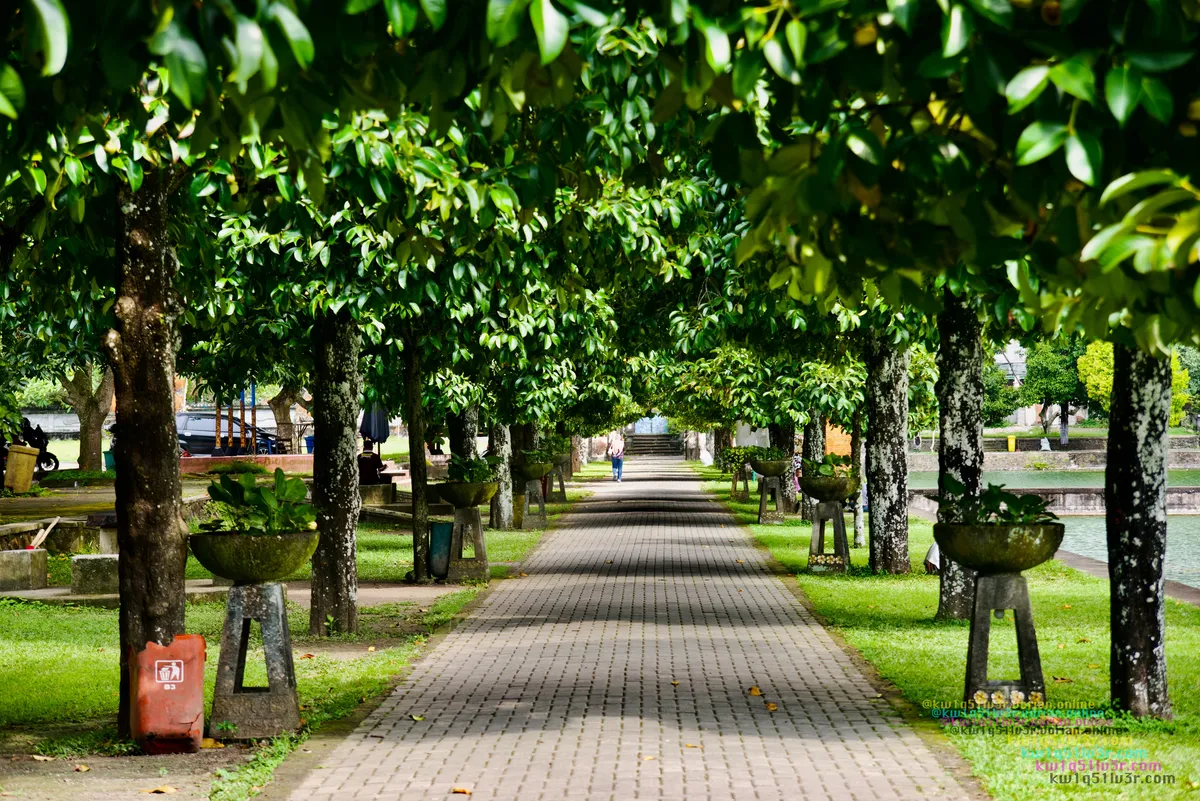
Shaded walkway at the Mayura Water Palace, Mataram City, Lombok, 2nd January 2026 |
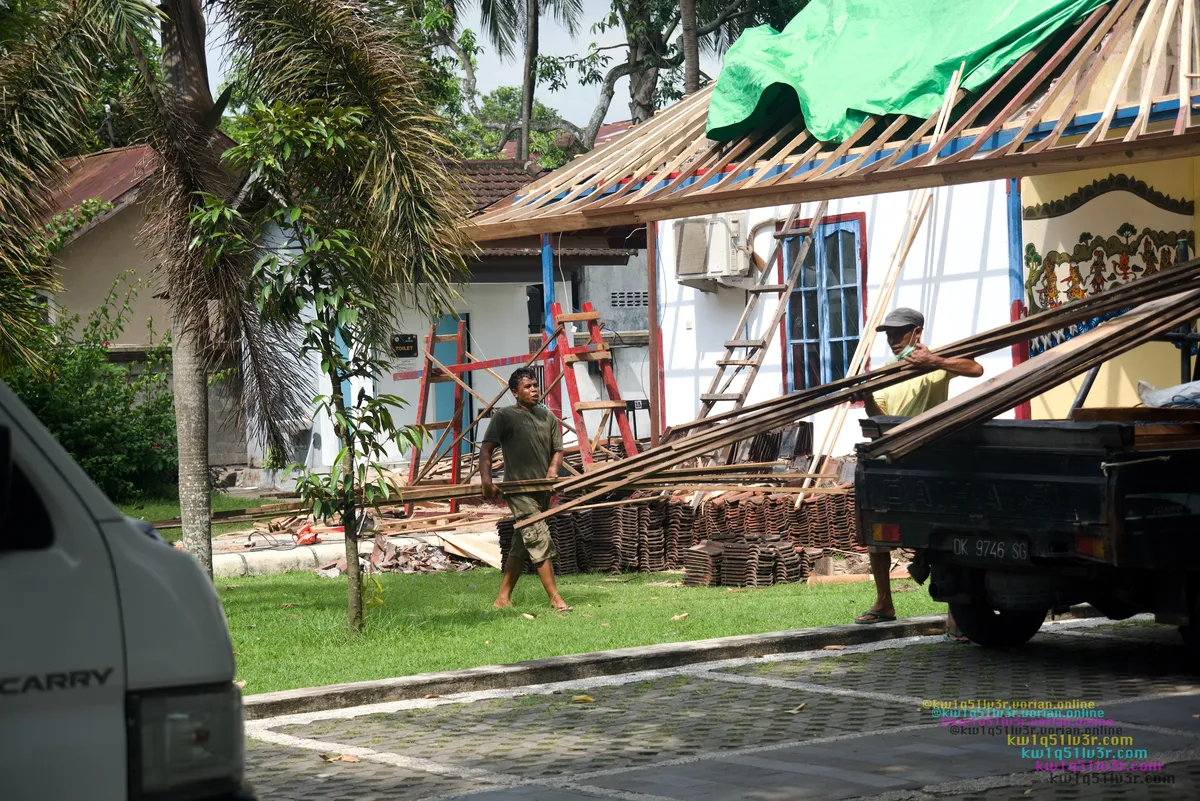
Workers move construction materials for restoration works at the Mayura Water Palace, Mataram City, Lombok, 2nd January 2026 |
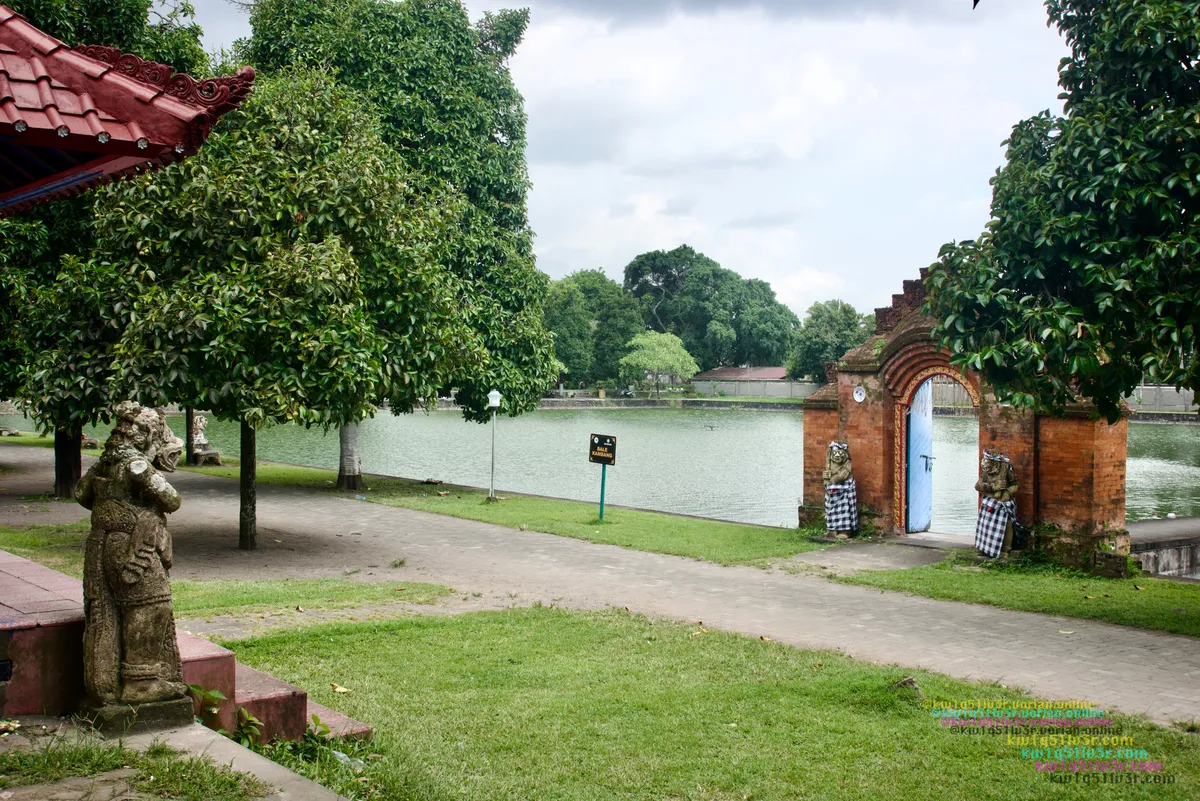
Entrance guard statues face off with each other at the Mayura Water Palace, mataram City, Lombok, 2nd January 2026 |
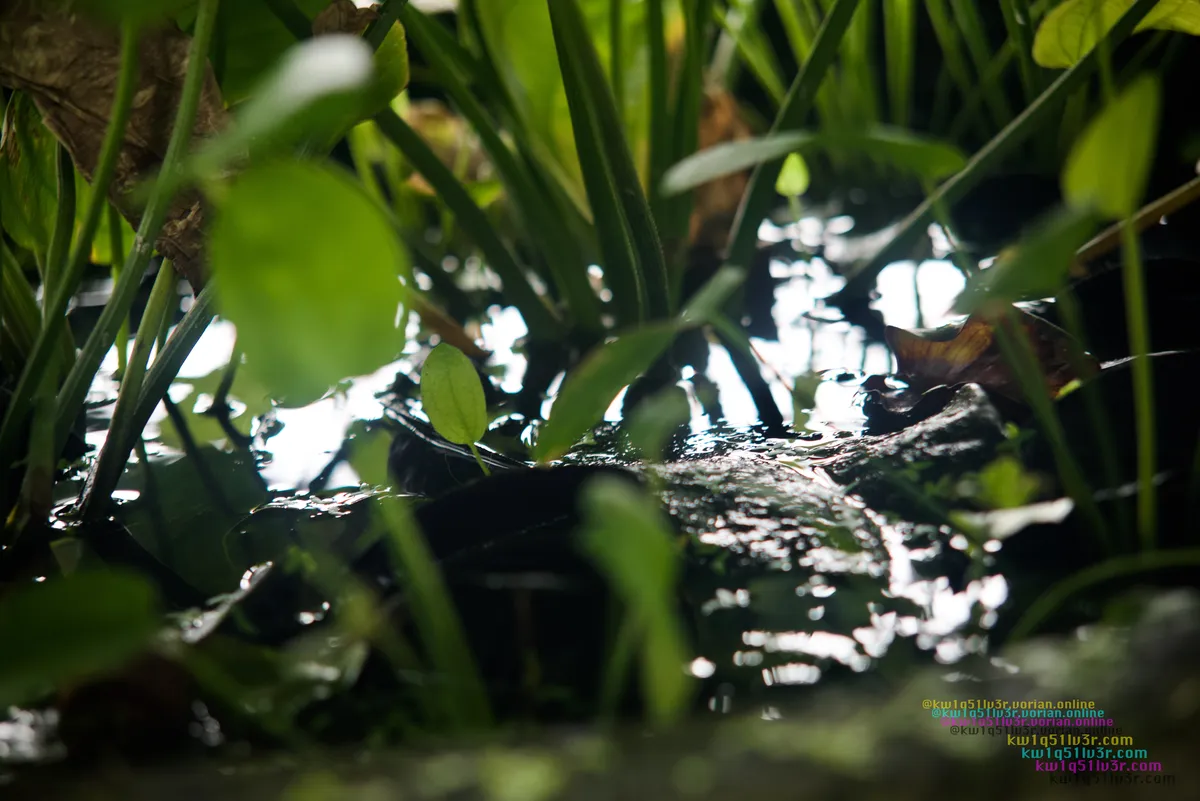
Algae and moss form a floating landscape within the water habitat of a potted plant. Mayura Water Palace, Mataram City, Lombok, 2nd January 2026 |
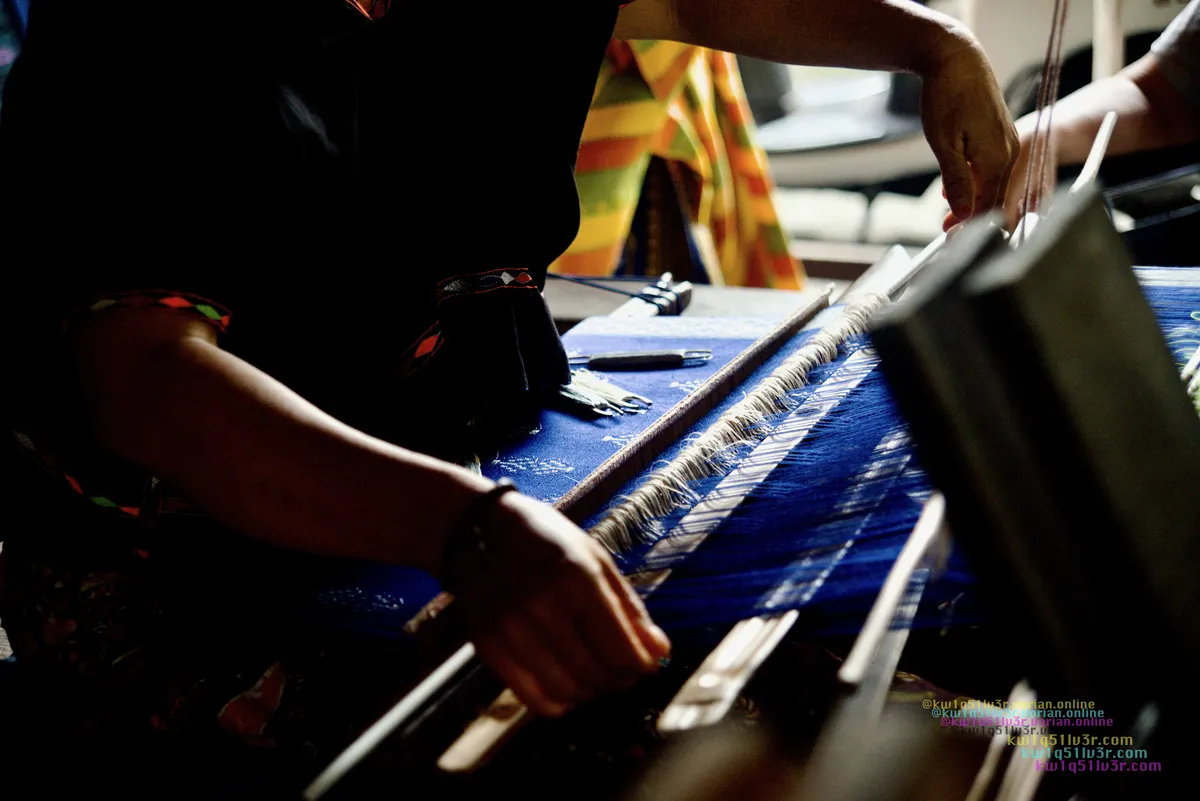
A Sasak weaver practices her craft. Industri Tenun Patuh, Sukarara, Central Lombok Regency, 2nd January 2026 |
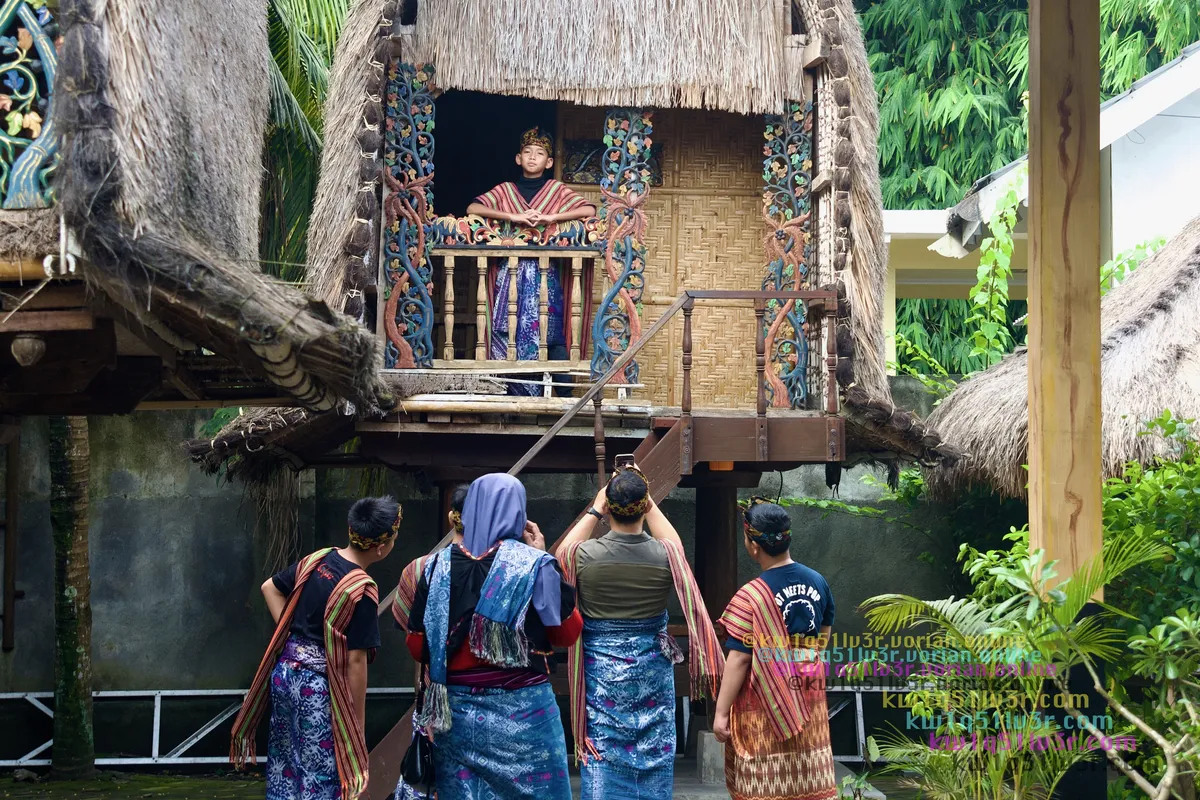
An Indonesian tourist poses for a photo clad in traditional Sasak garments in a replica Sasak village house. Industri Tenun Patuh, Sukarara, Central Lombok Regency, 2nd January 2026 |
Moreso than in Bali, this is where we saw local flavours of tourism, with a greater proportion of visitors coming from within muslim-majority regions of maritime Southeast Asia; think Malaysia, Brunei, and the rest of Indonesia. A lot of this is explained by a focus on "Halal Tourism", or more specifically a building-out of tourism infrastructure that is catered towards the lifestyle and spiritual needs of a Muslim tourist. This means more places for muslims to practice their religion, but also more places, i.e. hotels and resorts, that do not serve alcohol. Accordingly, it seems like a lot more guests stayed on the ship that day.
I'd already known that Indonesia had an interesting automotive culture, but did not realise that this included horse-drawn carts. In fact I'd seen plenty of interesting automotive culture in both south Bali and in Lombok, but given that I was spending most of my time in the back seat of a car because of my mom's preference for a more "traditional" tour, it wasn't easy to get good automotive photos the same way I was able to in North Bali. But this absolutely won't stop me from telling you about the candy-apple red cargo truck with a large "Bismillah" written on the sun visor in the same graffiti font as the logo for Need For Speed Most Wanted (2005).
After we returned to the ship and had our dinner, my mom retired for an early night, and after a shower and change I went back down to the port terminal building for the only singular gasp of free WiFi that I ever managed to get during the whole trip. I would've thought that getting roaming data would've been easy, especially since our mobile contract allowed us roaming in Indonesia and the data packages we could buy were very cheap, but the whole time, Indosat was uncooperative despite giving us a tantalising 4G signal everywhere we went. I could not figure out why this might be.
At the end, this trip felt utterly exhausting. By the time I got to Lombok, going out to tour the island felt like an obligation rather than a leisurely curiosity; like it was work instead of a holiday. Which, given that I'm my mother's fulltime caregiver, means that it was work. Thankfully there were still two full sea days from Lombok back to Singapore, where I could rest before getting back into the daily grind.
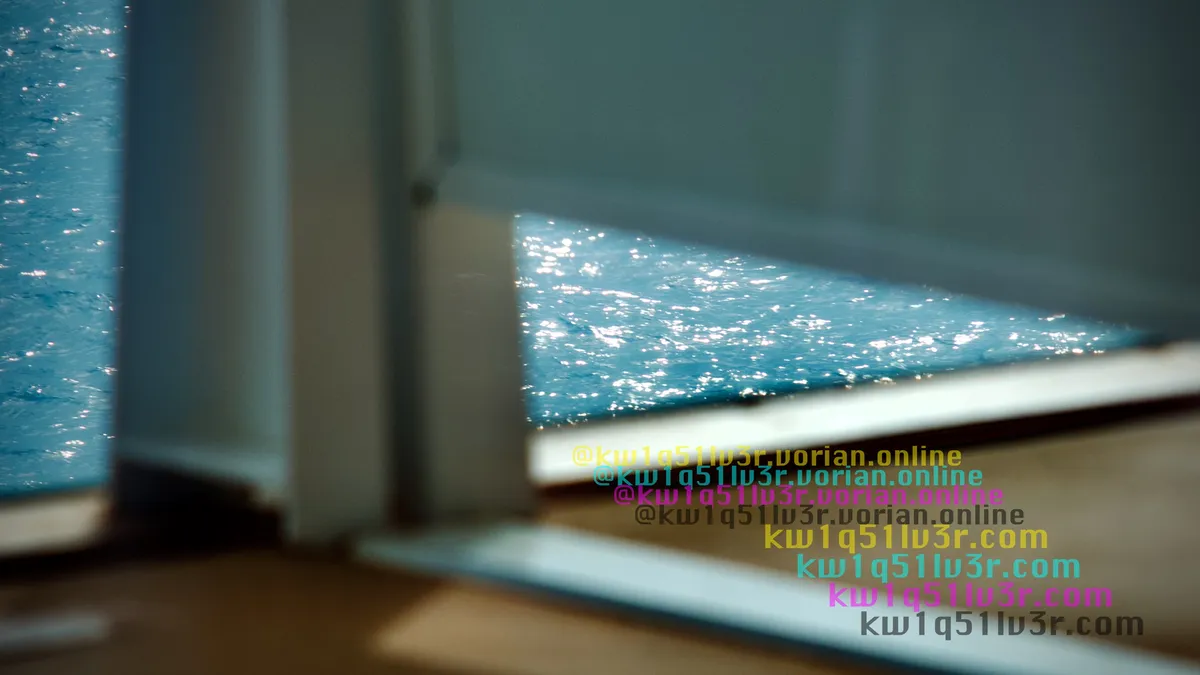
View of the sun reflecting off the ocean through balcony fittings. MV Ovation Of The Seas, Karimata Strait, 29th December 2025
So you can absolutely bet that I spent almost all of that free time editing my photos. You're welcome.